
A carbon monoxide alarm can make more than one kind of sound. A low-battery or end-of-life chirp is not the same as a carbon monoxide emergency alarm. The important job is to learn the difference while the alarm is operating normally, before you ever have to make that decision under stress.
Many common U.S. CO alarms use repeating groups of four loud beeps for a CO emergency. Maintenance warnings are usually isolated periodic chirps, but the exact low-battery, fault, and end-of-life patterns vary by brand and model. If you hear the actual CO emergency signal, an explicit voice or app warning for carbon monoxide, or a sound you genuinely cannot identify, get outside and follow the emergency steps below.
- Learn what the CO alarm sounds mean
- If it is the CO emergency signal
- If it is a maintenance chirp
- Test the alarm and learn its sound
- Smart and professionally monitored CO alarms
Learn what your CO alarm is telling you
The exact device in your rental controls, but these common patterns help separate an emergency alarm from routine device maintenance.
| What you hear or see | What it commonly means | What to do |
|---|---|---|
| Repeating groups of 4 loud beeps | Common carbon monoxide emergency pattern on many residential CO alarms | Get everyone outside and call 911 from outside. |
| An isolated chirp or short chirp pattern repeated periodically | Usually low battery, end of life, fault, or another maintenance condition | Check the device's indicators, voice message, app, or manufacturer instructions and use the maintenance section below. |
| A loud sequence immediately after you intentionally press TEST | The alarm's planned test sequence | Expected during testing. A combination alarm may play a smoke pattern and then a CO pattern. |
| Voice or app message | Smart alarms may state carbon monoxide, low battery, replace alarm, offline, test, or another status | Treat an explicit carbon monoxide warning as an emergency. Treat a clear battery, replacement, or connectivity message as a maintenance or status issue. |
This Texas Department of Insurance and State Fire Marshal video lets you hear the common smoke, CO, and maintenance signals side by side. The CO portion begins around 0:20 and the maintenance chirp around 0:26:
Do not memorize one maintenance chirp code and assume it applies to every detector. Manufacturers use different patterns for low battery, end of life, and malfunction. Learn the specific supplied alarm from visible brand or model information, its manual, or an authorized app while conditions are normal.
If it is the CO emergency signal
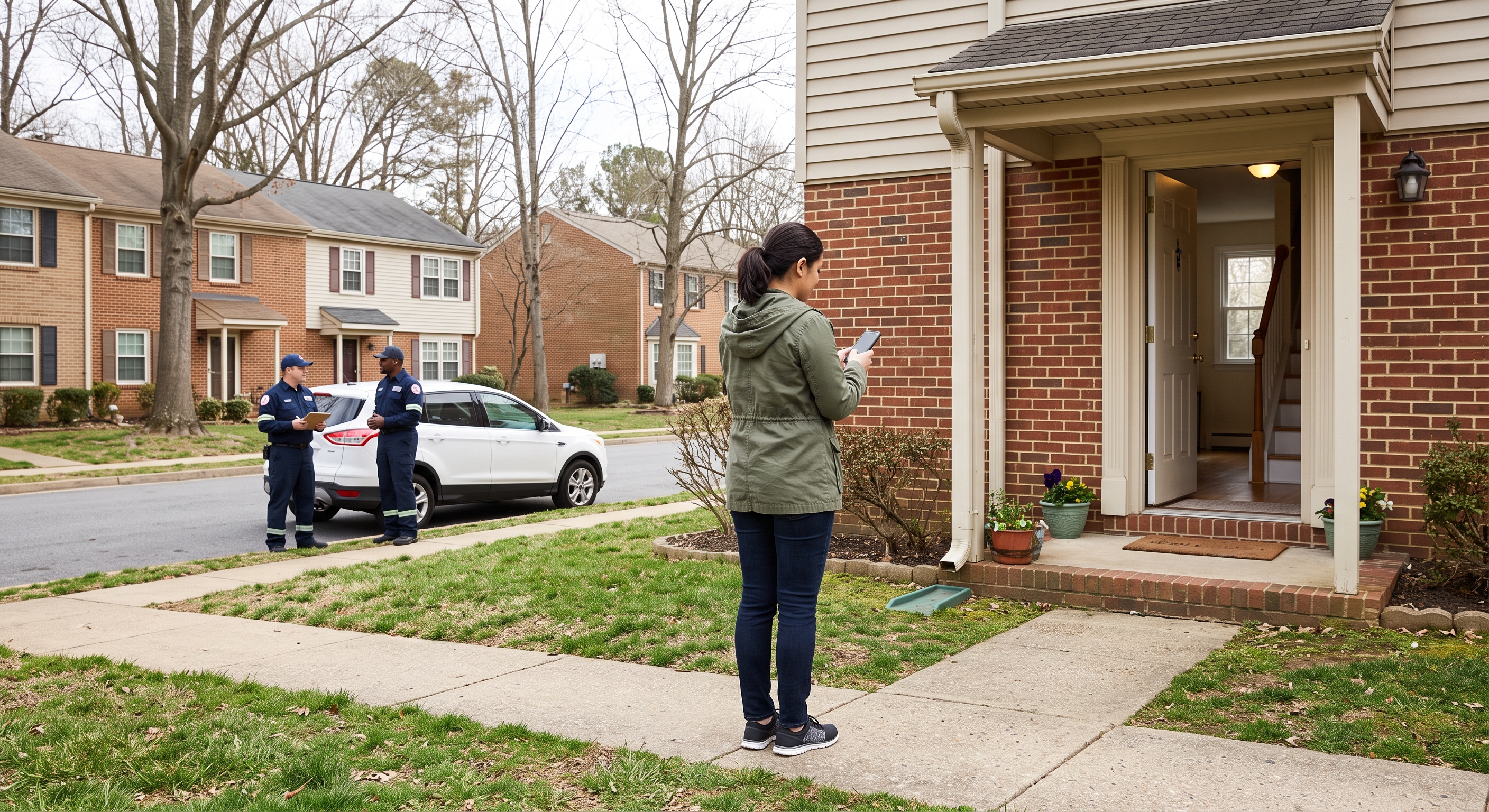
If the alarm is giving its carbon monoxide emergency signal, or a voice or app warning explicitly says carbon monoxide, get everyone outside into fresh air and call 911 from outside. Do not stay inside trying to identify which furnace, water heater, fireplace, range, dryer, or other appliance may be involved.
- Get everyone outside into fresh air.
- Call 911 from outside.
- Account for everyone who was inside.
- Do not go back in until emergency responders say it is safe.
Headache, dizziness, weakness, nausea, vomiting, unusual sleepiness, and confusion can occur with CO exposure. The alarm signal itself is enough reason to leave. Do not wait for symptoms before acting.
If you genuinely cannot tell whether the device is giving a CO emergency signal or a maintenance chirp, use this emergency path.
For PMI James River's broader emergency guidance, including what counts as an emergency and what to do after the immediate life-safety steps, use our rental emergency quick-reference.
If it is a maintenance chirp
A clear low-battery, end-of-life, or fault chirp is a device-maintenance condition, not the same thing as a CO emergency alarm. Start by identifying what the alarm itself says the chirp means.
- Look for a visible message, indicator light, or voice announcement.
- If you already have authorized app access, check the device status there.
- Identify the brand or model from readily visible markings or the app.
- Use the manufacturer instructions for the exact chirp code.
Virginia law requires residents to maintain landlord-installed carbon monoxide alarms and prohibits removing working batteries so the alarm becomes inoperative.
Battery-only, hardwired, and sealed CO alarms are different
CO alarms can be built in several different ways, and the battery procedure depends on the device.
- Battery-only alarms run on batteries alone.
- Hardwired alarms with battery backup are connected to household power but still use a backup battery. Some have a battery drawer you can access from the front or side. Others may require you to remove the alarm from the mounting plate, and some models require temporarily unplugging and reconnecting the manufacturer-designed quick-connect harness as part of ordinary battery service.
- Sealed 10-year units do not have a normal user-replaceable battery.
If it clearly indicates a low user-replaceable battery
If the alarm has a normal user-replaceable battery, replace the depleted battery with the type specified for that alarm and press TEST afterward.
Depending on the model, ordinary battery service may include opening a front battery drawer, twisting the alarm off its mounting plate, releasing a manufacturer-designed tamper tab or pin, or temporarily unplugging and reconnecting the quick-connect harness. That can be normal user maintenance when the manufacturer's instructions say to do it.
Stop before accessing field wiring, removing wire nuts, opening an electrical box, altering interconnect wiring, bypassing a safety feature, or doing electrical repair. Also stop if reaching the alarm would require unsafe climbing or overreaching.
Kidde's battery guidance explains this difference clearly for rear-loading alarms, including hardwired models that require disconnecting and reconnecting the quick-connect harness as part of normal battery replacement. You can review that guidance here: How Do I Replace My Smoke Alarm's Battery?
This First Alert and BRK battery-replacement demonstration is also useful for understanding common user battery-service steps on supported alarms:
If it indicates end of life, replacement, or a fault
Do not assume another battery will solve an end-of-life or fault signal. If the alarm is sealed, announces that it needs replacement, shows a fault, continues chirping after correct battery maintenance, or fails its test, submit a maintenance request.
Test the CO alarm so you know its sound
Testing is not only about confirming that the horn works. It is also the safest time to learn what the alarm's emergency signal sounds like.
When there is no active CO alarm, press the TEST button according to the manufacturer's instructions.
This manufacturer demonstration shows a typical First Alert or BRK physical alarm test:
If the alarm does not produce its normal test sequence, submit a maintenance request.
If the alarm is part of a professionally monitored system, read the smart-alarm section below before testing. A monitored system may require a specific test procedure.
Smart and professionally monitored CO alarms
Smart and monitored CO alarms can make one event seem much larger because several parts of the system may respond at once. Other detectors may sound, a hub or siren may activate, the app may send notifications, and a professional monitoring service may receive the event.
Familiarize yourself with the supplied system while everything is normal. Know the platform, the associated app or panel, whether professional monitoring is active, which sounds are tests or maintenance warnings, and what the actual CO emergency warning looks and sounds like.
If an actual CO emergency signal begins, leave the home first. Do not remain inside checking Wi-Fi or trying to determine which connected device triggered.
Google Nest Protect
Google's Nest Protect Safety Checkup tests the sensors, power, Wi-Fi, speaker, horn, and light ring. Google specifically recommends the checkup as a way to become familiar with Nest Protect's sounds and lights.
First Alert SC5
The First Alert SC5 combination alarm makes the distinction especially clear during a planned test: it announces that it is testing smoke, plays the smoke pattern, then announces carbon monoxide and plays the CO pattern. The test can also be started through the First Alert app.
Use First Alert's SC5 support information for current app and device guidance.
Kidde Smart alarms
Supported Kidde connected alarms can report device status and support app-based testing. Use Kidde Smart Product Support for the particular alarm and its status codes.
ADT monitored alarms
Depending on the installed ADT equipment, a detector event may cause the detector, ADT Base or Indoor Siren, other paired devices, and the ADT+ app to alert. A professionally monitored system may also send the event to ADT monitoring.
For a planned routine detector test, ADT instructs authorized users of professionally monitored systems to put the system in Test Mode first. Test Mode pauses monitoring response during the planned test but does not necessarily prevent local sirens from sounding.
Use Test Mode only when there is no emergency and you already have authorized ADT account access. Do not activate Test Mode because a real CO alarm has begun.
If the supplied smart alarm is not in your account
If the alarm appears assigned to another account, requests an administrator or owner credential you do not have, or requires a factory reset, ownership transfer, or removal and re-addition before you can access it, do not erase or claim the supplied device configuration.
Submit the setup problem through your Rentvine resident portal and include the alarm brand, a clear photo, and the app or panel message you see.
If the problem continues
If appropriate resident maintenance does not resolve a maintenance chirp, the problem returns, the alarm fails its test, a supplied smart feature remains unavailable, or you cannot proceed safely, submit a maintenance request through your Rentvine resident portal.
Include the alarm's location, the sound pattern you heard, a photo of the device, any visible, voice, or app message, whether the alarm appears battery-only, hardwired, or sealed, and the result of any testing or battery replacement you completed.
If the issue is a smoke-alarm signal or nuisance smoke alarm, use our smoke alarm troubleshooting guide. If you smell natural gas, follow our gas smell safety guidance.
For other household issues, use the PMI James River resident troubleshooting library or the broader Resident Maintenance hub.
Published: August 31, 2026