
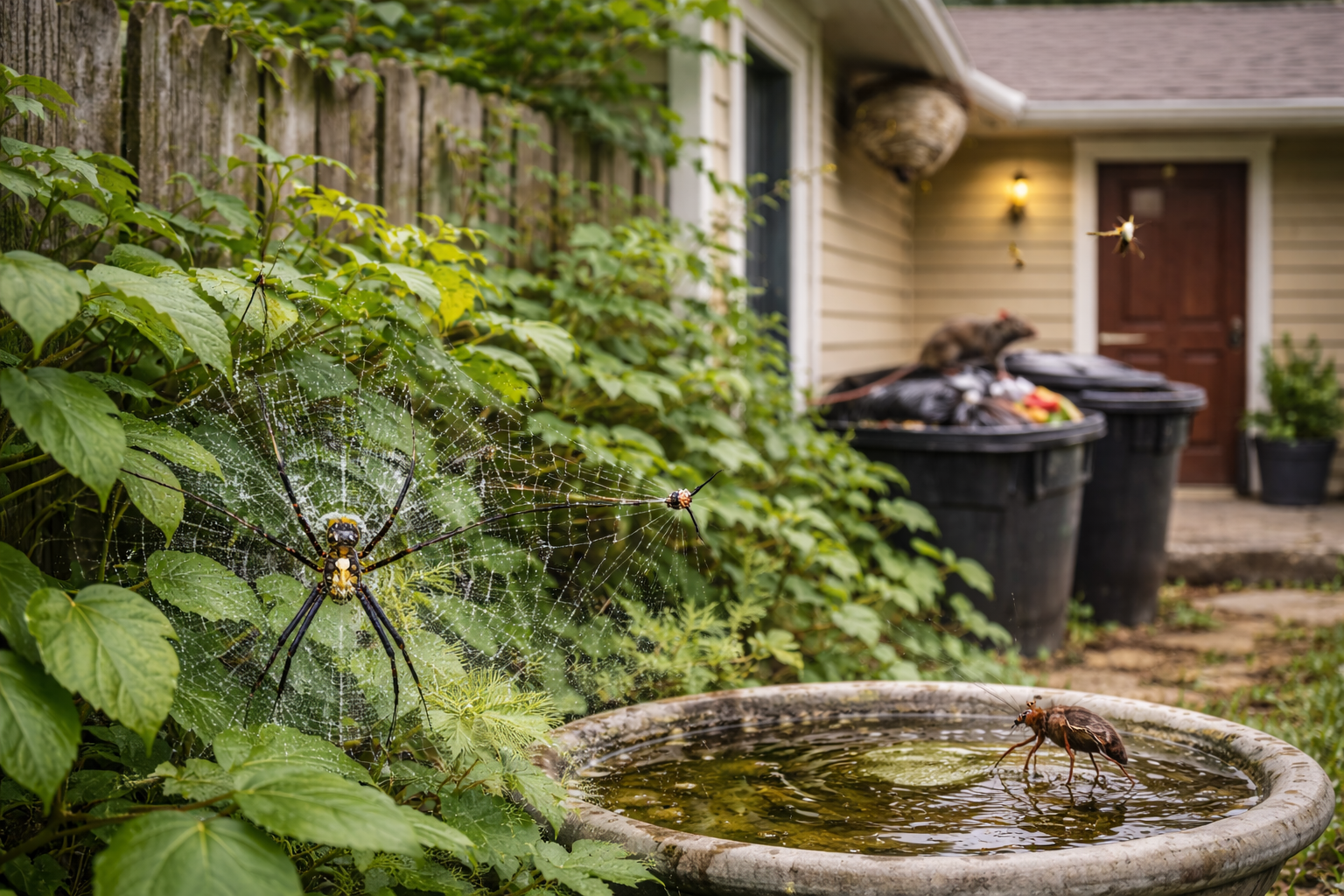
Outdoor hazards in Richmond rentals are easiest to resolve when the owner starts with the condition, not the label. “Yard work,” “pest control,” and “safety issue” can describe the same problem, but responsibility may change depending on where the condition is, what caused it, who controls the area, and whether a lease or local code assigns a duty. A consistent rental maintenance process should establish those facts before anyone decides who should perform the work or pay for it.
Virginia law also gives duties to both sides. The landlord has baseline fit-premises and repair duties, while the resident has duties involving cleanliness, pest prevention, prompt reporting, reasonable use, and damage prevention. The broader Virginia landlord-tenant law framework matters because an outdoor-hazard dispute can involve the lease, the Virginia Residential Landlord and Tenant Act, and a locality’s enforcement rules at the same time.
For a Richmond rental owner, the practical rule is to separate two questions: What needs to be corrected now? and Who is ultimately responsible for the work or cost? Those answers are often the same, but not always.
Key Takeaways
- Outdoor-hazard responsibility usually turns on four facts: location and control, severity, cause, and outside enforcement.
- Virginia law imposes duties on both landlords and residents. A lease can allocate specified maintenance tasks, but the lease must be read together with those statutory duties.
- Structural defects, common areas, drainage problems, and required access routes usually call for faster owner involvement because the owner controls the underlying property condition.
- Resident conduct can matter. Virginia law specifically requires residents to keep areas they occupy free from pests, report pests promptly, and in some cases bear added treatment costs caused by delayed reporting or failure to prevent an infestation.
- Richmond City and Henrico County enforcement rules can reach exterior conditions independently of the lease, so the locality must be checked before treating a problem as a private yard-care dispute.
- Good documentation separates immediate correction from later cost allocation and makes the final decision easier to explain.
In This Guide
- The four-factor responsibility test
- What Virginia law requires from both sides
- How Richmond-area enforcement can change the decision
- Common outdoor hazard scenarios
- Document the condition before allocating the cost
- A simple decision path for outdoor hazards
The Four-Factor Responsibility Test
PMI James River uses a four-part way of thinking about outdoor hazards because the word used in the maintenance request rarely decides responsibility.
1. Location and control
Start by identifying exactly where the condition is. A hazard in an exclusive-use yard is different from one on a shared walkway, attached to the building, or blocking a required entrance. Control matters because the person expected to correct a condition needs reasonable access and authority to do so.
2. Severity and immediacy
Next, distinguish an ordinary nuisance from a condition that affects access, creates a meaningful injury risk, or can worsen quickly. Poison ivy at the back fence does not present the same problem as poison ivy growing across the front walk. A few wasps in a yard are different from a nest above the door.
3. Cause or mechanism
Then identify what is producing the problem. Seasonal growth, resident-created standing water, a damaged vent screen, a grading problem, and an unsealed utility penetration are different causes even if they all produce an outdoor maintenance complaint. Cause often determines whether the solution is routine upkeep, behavior change, pest treatment, or a property repair.
4. Outside enforcement
Finally, check whether a local ordinance, HOA rule, or formal notice changes the timeline. Once an enforceable condition exists, the property may need prompt correction even if the owner and resident still disagree about who ultimately bears the cost.
This framework is useful because it keeps the first decision factual: document the condition, identify the source, and correct what cannot safely wait. Cost allocation can follow once the record is clear.
What Virginia Law Requires From Both Sides
Va. Code § 55.1-1220 requires a landlord to comply with applicable building and housing codes materially affecting health and safety, make repairs needed to keep the premises fit and habitable, maintain required systems, and keep multifamily common areas clean and structurally safe. The statute also allows a landlord and resident to agree in writing that the resident will perform certain listed duties and specified repairs or maintenance tasks, as long as the agreement is made in good faith and is not used to evade the landlord’s obligations.
The other half of the analysis is Va. Code § 55.1-1227. It requires residents to keep the parts of the dwelling and premises they occupy as clean and safe as the condition permits, keep occupied areas free from insects and pests, promptly report pests, use facilities reasonably, and avoid negligent damage. It also makes a resident financially responsible for added pest-treatment costs caused by unreasonable reporting delay and for treatment costs caused by the resident’s fault in failing to prevent an infestation in the occupied area.
That statutory split matters. A lease can assign routine mowing, leaf removal, or specified pest-related tasks, but an owner should not jump from “the lease says yard care is the resident’s job” to “every outdoor condition is the resident’s responsibility.” The condition may still be driven by a structural defect, common area, drainage problem, or other owner-controlled cause. The same distinction appears in the broader guide to landlord and resident repair responsibility and in PMI James River’s discussion of Virginia landlord maintenance duties.
There is also a practical distinction between authorizing the correction and deciding who pays. If a condition threatens access or may damage the property, the owner or property manager may need to coordinate the repair or treatment first because they can authorize vendors and structural work. The lease, statutory duties, cause, and documentation can then determine whether any cost is properly resident-side.
How Richmond-Area Enforcement Can Change the Decision
Richmond Metro is not governed by one exterior-maintenance rule. Richmond City and the surrounding counties use different ordinances and enforcement processes, so a rental owner should verify the locality before relying on a lease clause alone.
In Richmond City, the Property Maintenance and Code Enforcement Division states that exterior inspections include yards, sidewalks, and alleys. Property owners receive notices when the property is in violation, but the City also says a resident may receive a notice and be held responsible for corrective action at a rental. Richmond also lists grass and weeds under 12 inches and vegetation kept out of alleys, sidewalks, and public rights-of-way among common exterior-maintenance requirements.
Henrico’s rules add a different wrinkle. Henrico County Code §§ 10-135 through 10-138 define “weeds” to include poison ivy and poison oak and treat weeds over 12 inches within specified distances as a nuisance. The same definition of “owner” includes both principal occupants and title holders. That makes it especially important not to assume that a Henrico vegetation complaint automatically belongs to only one side of the lease.
The management response is simple: if a locality has issued a notice, correct the enforceable condition within the required timeline and preserve the notice, photographs, lease language, and work record. The lease and cause analysis can still determine whether a resident obligation or reimbursement issue exists afterward.
Common Outdoor Hazard Scenarios
Poison ivy and hazardous vegetation
Poison ivy shows why location matters. Growth along a back fence in an exclusive-use yard may fit ordinary yard care when the lease assigns that work to the resident. Growth across an entry walk, steps, gate, mailbox route, or shared path creates a different access problem and usually calls for faster owner or manager involvement.
In Henrico, poison ivy is also expressly included in the County’s weeds definition. The local rule does not eliminate the lease analysis, but it adds an enforcement question. For routine grass, weeds, and yard allocation, the separate guide to who pays for lawn care in a Richmond rental owns that narrower issue.
What usually changes the decision:
- Whether the growth is in an exclusive-use area or a common/shared area.
- Whether it interferes with normal entry or exit.
- Whether the lease clearly assigns routine vegetation maintenance.
- Whether a local notice or weeds rule applies.
- Whether an owner-controlled property condition is contributing to repeated growth.
Wasps, hornets, and stinging insects
A nest in open vegetation and a nest attached to the building should not be treated as the same maintenance call. If a nest is built into a soffit, porch ceiling, wall cavity, light fixture, or other part of the structure, the owner controls the repairable building condition. If it also affects a required entrance or stair landing, the response should be prompt.
A nest in a resident-maintained portion of an exclusive-use yard is more fact-specific. The lease may assign routine exterior upkeep, and Virginia’s resident pest duties may matter. Even then, the safest operational choice may be for management to coordinate an appropriate pest-control vendor and decide cost allocation after the location, cause, and lease responsibility are documented.
What usually changes the decision:
- Whether the nest is attached to or inside the structure.
- Whether it affects a required path, entrance, stair, or common area.
- Whether repeated nesting points to a gap or cavity that needs repair.
- Whether the resident has a clear written maintenance duty for the area.
Rodents and exterior entry points
Rodent responsibility is usually a cause question. The U.S. Environmental Protection Agency recommends both sealing holes that allow rodents into a home and removing food, water, and shelter sources. That is the same split a rental owner should document.
Damaged vent screens, gaps around utility penetrations, missing door sweeps, compromised crawlspace access, or other building-envelope defects point to owner-side repair and exclusion. Trash, food sources, heavy clutter, or other resident-created attractants may create or increase resident responsibility, especially because § 55.1-1227 expressly addresses pest prevention, prompt reporting, and treatment costs caused by resident fault or unreasonable delay.
Virginia also strengthened the legal importance of serious rodent conditions in 2026. Under Va. Code § 55.1-1259, a locality may bring an action to enforce the landlord’s fit-and-habitable duty when a rodent infestation is part of a material landlord noncompliance that presents a serious threat and the landlord fails to remedy it after notice. That does not make every rodent sighting a landlord violation; it makes the source and response record more important.
What usually changes the decision:
- Confirmed structural entry points.
- Documented food, water, waste, or shelter attractants.
- Interior infestation versus an isolated exterior sighting.
- How quickly the condition was reported.
- Whether repair, sanitation, treatment, or a combination is needed.
Spiders and nuisance insects
Seasonal spider sightings with no concentrated entry pattern are usually a different problem from insects repeatedly appearing around a damaged screen, door gap, vent, or other opening. The first may involve routine cleanliness, pest prevention, and monitoring. The second may point to a repairable exclusion issue.
Owners should avoid diagnosing the problem from the species name alone. The useful evidence is where activity concentrates, whether a defect is visible, and whether the resident reported the problem promptly. If the complaint turns into a pest-treatment cost dispute, the duties in § 55.1-1227 provide a more useful starting point than a blanket lease statement that “all pests are the tenant’s responsibility.”
Mosquitoes, standing water, and drainage
Standing water is another source-driven problem. The Richmond and Henrico Health Districts advise property occupants to dump water that collects in containers such as bird baths, flowerpots, buckets, and similar items because small amounts of standing water can become mosquito habitat.
If the water is in a resident-controlled container, the correction is usually straightforward. If water persistently collects because of grading, a failed drain, roof discharge, foundation conditions, or another property defect, the owner controls the underlying repair. The owner should investigate the source rather than treating every mosquito complaint as either “normal summer insects” or “the resident’s problem.”
What usually changes the decision:
- Container-created water versus property-driven drainage.
- Whether the condition clears normally after rain or persists.
- Whether water is affecting the building, an entry route, or another required use area.
- Whether the source can be corrected through resident behavior or requires property work.
Document the Condition Before Allocating the Cost
Outdoor-hazard disputes become harder when the file contains only a close-up photo and a complaint. PMI James River’s preferred approach is to document enough context to answer the responsibility questions without guessing.
Photograph the location. Include a wide view showing the hazard relative to the building, doors, stairs, walkways, gates, shared areas, or property boundary. Then add close views if they help identify the condition.
Record the timeline. Note when the condition was first reported, whether it is getting worse, and whether a locality, HOA, vendor, or other third party has already provided a deadline or finding. The same evidence-first approach is useful in broader access, notice, and documentation files.
Separate observation from diagnosis. “Standing water remains 48 hours after normal rain” is an observation. “The yard has bad drainage” is a diagnosis that may still need confirmation. The same distinction applies to “rodent droppings under the sink” versus “rodents are entering through the crawlspace.”
Identify the relevant lease duty. Pull the exact yard-care, pest-control, sanitation, reporting, or damage clause rather than relying on a general statement about what residents “normally” handle.
Separate correction from reimbursement. If a condition needs prompt work, authorize the correction through the party who can actually do so. Then decide financial responsibility from the cause, lease, statute, and documentation. This keeps a reimbursement dispute from delaying a repair that protects the property or restores normal use.
A Simple Decision Path for Outdoor Hazards
- Locate the condition. Is it in an exclusive-use yard, common area, required access route, or part of the structure?
- Classify urgency. Is it an ordinary nuisance, an access problem, a likely property-damage issue, or a condition that needs prompt professional attention?
- Identify the cause. Is the source structural, drainage-related, seasonal, behavior-driven, sanitation-related, or still unknown?
- Check both legal duties and the lease. Review landlord duties, resident duties, and any written maintenance allocation that actually applies to the condition.
- Check local enforcement. Richmond City, Henrico, Chesterfield, Hanover, and HOAs can impose different requirements and timelines.
- Correct what cannot wait. Do not hold up necessary work merely because the cost allocation is still being documented.
- Allocate cost from the record. Use the cause, lease, reporting history, vendor findings, and applicable law rather than a blanket “landlord” or “tenant” label.
Frequently Asked Questions
Is a landlord always responsible for poison ivy at a Richmond rental?
No. Responsibility depends on the location, lease, local code, and facts. Poison ivy in an exclusive-use yard may fall within assigned routine yard care. Growth affecting a shared area or required access route calls for a different response. In Henrico, poison ivy is also expressly included in the County’s weeds definition, so local enforcement can become part of the analysis.
Can a lease make the resident responsible for all outdoor pests?
A lease can assign specified maintenance tasks, and Virginia law already gives residents meaningful pest-prevention and reporting duties. That does not make every pest condition resident-side. A structural entry point, common-area condition, drainage defect, or other owner-controlled cause may still require owner repair or coordination. The specific lease clause and the source of the problem matter.
Who pays when a resident caused or worsened the pest problem?
Virginia law specifically allows resident financial responsibility for added treatment costs caused by unreasonable delay in reporting pests and for treatment costs caused by the resident’s fault in failing to prevent infestation in the occupied area. Documentation should show the condition, reporting timeline, and cause before a charge is assigned.
Are rodents automatically the landlord’s responsibility?
No. Structural entry defects point toward owner repair, while resident-created food, waste, or shelter sources can affect responsibility and cost. Serious rodent infestation tied to landlord material noncompliance can also trigger the 2026 enforcement provisions in § 55.1-1259. The cause and response record are critical.
Does standing water automatically make the landlord responsible for mosquitoes?
No. Water collecting in resident-controlled containers is different from water that persists because of grading, drainage, roof discharge, or another property condition. The source should be documented before responsibility is assigned.
The Bottom Line
Outdoor-hazard responsibility in a Richmond rental should follow the facts: where the condition is, how serious it is, what caused it, and whether outside enforcement changes the timeline. Virginia law gives duties to both landlords and residents, so a one-line lease clause is rarely the whole answer.
The strongest management files separate immediate correction from later cost allocation. That approach gets the property problem handled, preserves the evidence needed for a fair responsibility decision, and reduces the chance that a routine maintenance issue turns into a prolonged owner-resident dispute.
Next Step: Put One Process Behind Outdoor Hazard Decisions
PMI James River coordinates maintenance documentation, vendor access, repair decisions, and resident communication for rental owners across Richmond City, Henrico, Chesterfield, and Hanover. Owners who want one process for deciding what needs action, what caused the problem, and how responsibility should be documented can schedule a consultation with our Richmond property management team.
Published: May 26, 2025
Updated: August 22, 2026