
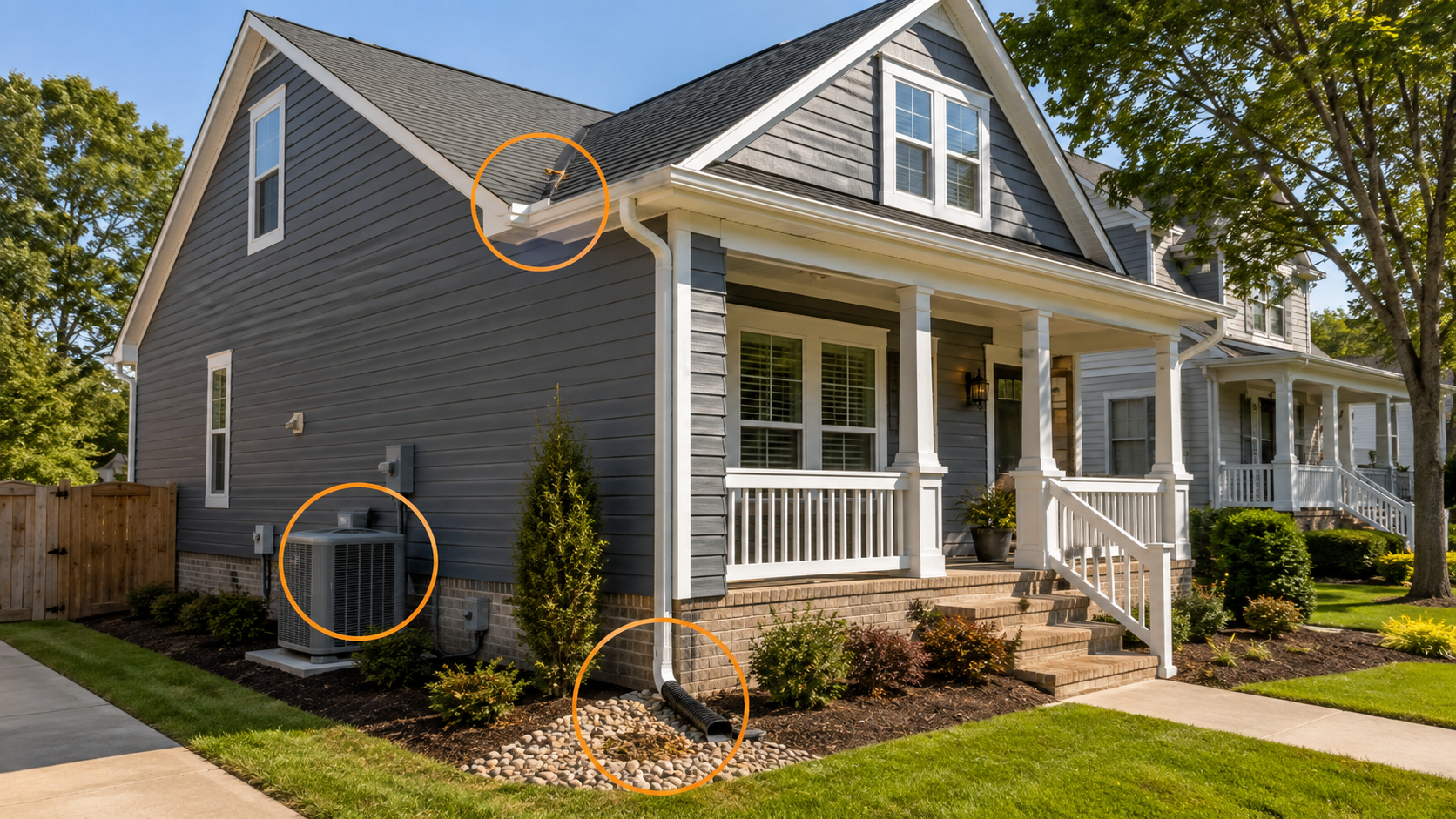
Proactive property maintenance is not a program for fixing everything early. For Richmond rental owners, it is a timing and decision system: identify conditions that can accelerate damage, decide what cannot wait, and handle routine work while there is still time to choose the scope, vendor, and schedule.
That matters across Richmond City, Henrico, Chesterfield, and Hanover because the properties are different even when the operating problem is the same. An older city home may have layered plumbing, drainage, roofing, or electrical history. A newer suburban property can still develop HVAC, appliance, moisture, or exterior issues that become expensive when the first warning signs are missed. PMI James River's Richmond rental maintenance services are built around finding those warning signs early enough to preserve options.
A well-run rental will still need maintenance. The aim is fewer forced decisions, less secondary damage, a more stable resident experience, cleaner records, and a lower chance that preventable maintenance problems spill into turnover or vacancy.
Key Takeaways
- Proactive maintenance is mainly about timing. The owner gets more choices when a problem is found before the timeline becomes urgent.
- Active moisture, safety concerns, required repairs, and damage-accelerating conditions belong ahead of stable cosmetic work and optional improvements.
- Owner reserves, repair authority, and escalation rules work best when they are set before a work order arrives.
- Richmond's seasonal risks change what deserves attention, but every property still needs a plan based on its own age, history, systems, and prior failures.
- Property evaluations matter because residents report symptoms, not necessarily the early asset conditions that create future repair scope.
- Good documentation turns each repair into better information for the next decision.
In This Guide
- Proactive Maintenance Is a Decision System
- Decide What Cannot Wait
- Controlled Deferral Is Not Neglect
- Owner Controls Should Exist Before the Work Order
- Richmond Seasonality Changes the Priority List
- Property Evaluations Catch Quiet Problems
- Virginia Law Sets the Floor
- Documentation Makes Maintenance Cumulative
Proactive Maintenance Is a Decision System
Every rental will need repairs. Plumbing components wear out. Roofs age. HVAC equipment eventually fails. Sealants deteriorate. Residents use the home every day. Proactive maintenance does not eliminate that reality. It creates more chances to discover a problem while the owner can still make a normal decision.
A useful system has four inputs:
- Resident reports. A slow drain, weak airflow, intermittent leak, loose handrail, unusual sound, or recurring comfort complaint can be an early signal.
- Vendor findings. A technician may spot adjacent deterioration, recurring symptoms, or a component approaching replacement while completing another job.
- Property evaluations. Condition reviews can surface issues that have not yet affected normal use.
- Maintenance history. Repeat calls, prior water events, equipment age, and previous temporary fixes change what the next symptom means.
The system then has to convert those inputs into a decision. What needs immediate stabilization? What should be scheduled soon? What is routine? What can be monitored? What requires an owner decision? The cost difference between those categories is developed further in Rental Repair Economics: Why "Fix It When It Breaks" Gets Expensive.
Decide What Cannot Wait
Proactive maintenance fails when every defect is treated the same. A peeling cabinet finish and active water intrusion are both maintenance items, but they do not deserve the same place in the queue.
For owner decision-making, three broad categories are useful:
- Emergency or immediate stabilization. The first job is to protect people, essential services, or the property from an active high-consequence condition.
- Urgent or damage-accelerating. The condition may be controlled, but delay can materially expand the repair scope, interrupt an important service, or create a harder problem.
- Routine or planned. The condition is stable enough to schedule normally, group with other work, monitor, or address as part of a broader maintenance plan.
Moisture is the clearest example of why priority matters. The U.S. Environmental Protection Agency emphasizes moisture control, prompt leak repair, and drying wet areas as core mold-prevention practices. Its building guidance also calls out roofs, plumbing, crawl spaces, HVAC drainage, and other hidden areas where water can remain unnoticed. See the EPA's moisture and mold prevention guidance.
Every stain does not require the same response. Active moisture, a spreading pattern, or a recurring water source should move ahead of cosmetic work when delay could expand the problem.
Controlled Deferral Is Not Neglect
Owners should not hear "proactive" and assume every imperfect item must be repaired now. Some work can wait. The difference is whether the delay is intentional and supported by the condition of the property.
A stable cosmetic defect, an optional upgrade, or a non-urgent improvement may reasonably be deferred. Active leakage, recurring system failure, spreading deterioration, required rent-ready work, or a condition likely to create an immediate post-move-in complaint belongs in a different category.
That distinction protects cash flow because it prevents two opposite mistakes: spending on low-value work too early, and postponing high-consequence work until the owner has fewer choices. Our deferred maintenance and vacancy guide focuses on the repair-or-defer decision before marketing, while the repair-economics article explains what happens when ordinary repairs become premium-timeline events.
Maintenance can also affect vacancy after a resident is already in place. Repeated failures, unclear updates, and repairs that never seem fully closed can make a stable home feel unreliable. The separate guide to maintenance quality and resident retention addresses that renewal side of the equation. Proactive maintenance cannot guarantee retention, but it can reduce maintenance-driven friction that owners have some ability to control.
Owner Controls Should Exist Before the Work Order
The best time to decide how routine maintenance will be handled is before anything breaks. Otherwise, every work order becomes a new negotiation about money, authority, vendors, and timing.
Three owner-side controls matter most:
- A funded reserve. Routine expenses should not have to wait while funds are moved into place.
- A clear repair-authorization limit. Ordinary work can move inside an agreed boundary, while larger costs and strategic choices return to the owner.
- Property-specific instructions. Warranties, known system history, special access issues, preferred handling, and prior repairs should already be part of the file.
In PMI James River's Richmond-area work, peak-season HVAC reliability can become a scheduling and authorization problem as much as a mechanical one. When vendor calendars tighten, a repair that needs owner approval can become harder to schedule simply because the decision sits too long. A clear authorization structure preserves owner control without requiring fresh approval for every routine repair.
The detailed mechanics of reserves, authorization limits, scope control, owner escalation, and repair closeout belong in Rental Maintenance Operations: The Controls That Keep Repairs Predictable.
Richmond Seasonality Changes the Priority List
Richmond does not have one maintenance season. National Weather Service climate normals show a region that has to operate through hot summers, meaningful rainfall, and winter freezing conditions. The same property therefore faces different pressure points over the course of the year. The Richmond climate normals provide the weather context, but the maintenance plan still has to reflect the specific property.
Johnny Wilson, a property manager at PMI James River, sees the practical version of that cycle across Richmond-area rentals:
- Spring: drainage performance, roof and gutter condition, pollen loading, cooling readiness, and the return of moisture signals after winter.
- Summer: HVAC workload, condensate drainage, humidity, storm water, vegetation, and recurring comfort complaints.
- Fall: leaf load, gutters, roof drainage, heating readiness, exterior plumbing decisions, and preparation before the first sustained cold.
- Winter: heat reliability, freeze-vulnerable plumbing, storm-related leaks, exterior lighting, and conditions that become harder to address during a cold event.
An older Richmond City home can need a different rhythm from a newer property in Henrico or Chesterfield. A Hanover home with heavier tree cover or a crawl space can have another set of priorities. That is why PMI James River uses a local Richmond rental maintenance seasons framework rather than treating a national checklist as a complete plan.
Owners who want the task-level version can use the Richmond rental property maintenance checklist. Spring airflow problems also have their own pattern, which is why the site has a separate guide to pollen-season HVAC complaints and filters.
Property Evaluations Catch Quiet Problems
Residents are an important source of maintenance information, but they are not asset managers. They usually report what affects daily living. They may not recognize an early roof stain, slow exterior deterioration, a drainage pattern, a soft trim board, a minor crawl-space moisture cue, or a condition that has changed gradually.
Property evaluations create another visibility channel. They can compare current condition with prior documentation, identify issues that never became work orders, and show whether an earlier repair actually held.
The right cadence should reflect the property rather than a universal annual rule. Age, prior water events, maintenance history, equipment condition, lease stage, exterior exposure, and recurring complaints can justify more or less attention. The dedicated guide to Richmond rental property evaluation frequency explains that risk-based approach.
Condition records also help separate aging from damage. Move-in documentation, move-out documentation, and mid-lease evaluations give owners a stronger timeline when a later repair raises responsibility questions. That evidence relationship is covered in the Virginia wear-and-tear versus damage guide.
Virginia Law Sets the Floor
Maintenance strategy does not replace Virginia landlord duties. As of August 22, 2026, Virginia Code § 55.1-1220 requires landlords to make repairs necessary to keep rental premises fit and habitable and to maintain supplied electrical, plumbing, sanitary, heating, ventilating, air-conditioning, and other facilities and appliances in good and safe working order. The section also addresses moisture and mold obligations and smoke-alarm certification.
Subsection D allows written agreements assigning certain duties and specified repair or maintenance tasks to a resident, subject to the limits stated in the statute. That is not a substitute for understanding which duties remain with the landlord. The broader responsibility line is covered in our Virginia landlord maintenance responsibilities guide.
The operating lesson is simple: legal and safety requirements form the floor. Above that floor, owners still need business decisions about preventive work, optional improvements, equipment planning, and how much risk they are willing to carry. Those categories should not be mixed together.
Documentation Makes Maintenance Cumulative
A repair should leave the next decision easier than the last one. That only happens when the file records what actually occurred.
A useful maintenance record should answer:
- What was reported, and when?
- What did the photos, evaluation, or vendor show?
- What was authorized?
- What work was completed?
- Was the outcome verified, and is anything still being monitored?
That record has value beyond billing. It helps identify repeat failures, supports repair-versus-replace decisions, gives a future vendor useful history, and reduces arguments about whether a condition is new, recurring, or unresolved. It also improves resident communication because the next update can start from documented facts instead of rebuilding the story.
Some items deserve especially careful records because they intersect with life safety or statutory duties. Smoke alarms are a good example. Our dedicated guide explains smoke-alarm placement, documentation, and Virginia rental requirements.
FAQs
Is Proactive Maintenance More Expensive Than Reactive Maintenance?
Proactive maintenance can move some spending earlier without increasing total maintenance needs. The practical benefit is preserving scheduling, diagnosis, vendor, and scope options before a condition becomes urgent. Compare planned work with the likely cost and disruption if a known risk is allowed to escalate.
How Much Should a Richmond Rental Owner Budget for Maintenance?
There is no single percentage that fits every rental. Age, system condition, prior repairs, property type, reserve goals, and near-term capital needs all change the answer. Owners should separate the operating reserve needed for routine repairs from longer-term capital planning so one major replacement does not make ordinary maintenance look unexpectedly expensive.
How Often Should a Rental Property Be Evaluated?
Use a risk-based cadence rather than a universal schedule. A stable newer home with clean history may justify a different rhythm from an older property with prior moisture events, recurring HVAC complaints, aging systems, or recent major repairs. Move-in and move-out documentation should still create clear condition endpoints.
Can an Owner Approve Every Repair Personally?
Yes, but a fresh approval for every routine repair can add delay without improving every decision. A better structure is often to define ordinary authority in advance, then return larger costs, replacement choices, optional improvements, insurance issues, and unusual scopes to the owner.
Does Proactive Maintenance Prevent Vacancies?
It cannot eliminate vacancy or guarantee a renewal. It can reduce some maintenance-driven vacancy pressure by limiting recurring failures, post-move-in repair frustration, deferred condition problems, and the "same issue again" experience that makes a home feel unreliable.
What Maintenance Can Usually Wait?
Stable cosmetic defects and optional improvements can often wait when they are not hiding a larger condition. Active moisture, required repairs, safety concerns, important service failures, and damage-accelerating problems should be evaluated on a faster timeline. The correct decision depends on the facts of the property and any legal or contractual duty that applies.
Conclusion: Protect the Decision Window
Proactive maintenance protects the period when an owner still has choices. Early information makes it easier to schedule the right vendor, define the scope, control approvals, and decide whether a repair should happen now, later, or as part of a larger replacement plan.
For Richmond rental owners, the strongest system combines local seasonal timing, property-specific risk, clear owner controls, resident reporting, property evaluations, and clean closeout records. That is how maintenance shifts from a stream of isolated repairs into an asset-management process.
Next Step
Owners in Richmond City, Henrico, Chesterfield, and Hanover who want maintenance integrated with leasing, resident communication, and financial reporting can review PMI James River's broader Richmond property management services. For a maintenance-specific conversation, contact PMI James River.
Published: September 18, 2025
Updated: August 22, 2026