
A damage charge can be legitimate and still be too high. That is the core betterment problem. A resident may have caused a stain, gouge, burn, or other condition beyond ordinary wear, but the owner still has to separate the value that was actually lost from the cost of putting a brand-new item in its place.
For Richmond-area rental owners, the cleanest process is to decide responsibility first, then price the loss. A structured maintenance and documentation process helps preserve the installation records, condition photos, work orders, and vendor scope that make that calculation possible. The threshold question still comes from the broader distinction between wear and tear versus damage: did the resident actually cause a chargeable loss?
Only after that question is answered does useful life matter. Virginia law does not supply a depreciation table or a mandatory proration formula. Useful life is a valuation tool for keeping a supported damage charge proportional to the remaining value of what was damaged.
Key Takeaways
- Liability comes first. Useful life does not turn ordinary wear into resident damage.
- Virginia Code allows deductions for qualifying damages less reasonable wear and tear, but it does not prescribe a useful-life table or proration formula.
- A straight-line proration formula can be a useful starting point, but age, starting condition, repair scope, and upgrades can all change the final charge.
- An owner may reasonably choose full replacement for operational reasons while still charging the resident only for the supported remaining value that was lost.
- If age, condition, or scope cannot be proved, a smaller documented charge is usually stronger than a larger charge built on assumptions.
In This Guide
- What Virginia Law Actually Requires
- Useful Life Is a Valuation Tool, Not a Legal Table
- A Practical Proration Method
- Paint, Carpet, and Hard-Surface Flooring
- Full Replacement Does Not Always Mean Full Charge
- Documentation Before the Math
- Richmond-Area Examples
What Virginia Law Actually Requires
Virginia Code § 55.1-1226 allows a security deposit to be applied to defined categories, including damages the landlord suffers because of a tenant's noncompliance with § 55.1-1227, less reasonable wear and tear. The same section requires the landlord to provide an itemized written notice of deductions within 45 days after the later of the tenancy termination date or the date the resident vacates.
That statute answers the legal threshold. It does not say that carpet lasts a fixed number of years, that interior paint follows one mandatory cycle, or that every replacement cost must be run through one depreciation formula. It also does not let a useful-life calculation create a deduction where the underlying condition is ordinary aging.
This is why the sequence matters:
- Establish that a chargeable condition exists.
- Separate resident-caused loss from reasonable wear and tear and owner-side maintenance.
- Define the repair or replacement scope needed to restore the prior condition.
- Then determine what portion of that loss still had remaining value.
The timing and statement requirements are a separate compliance layer. Our guide to Virginia security deposit itemization covers how the condition record, invoice scope, and 45-day deadline fit together. Owners who need the broader framework can also review the full security deposit rules for Richmond landlords.
Useful Life Is a Valuation Tool, Not a Legal Table
Useful life is best treated as an estimate of how long a component is reasonably expected to provide service before ordinary replacement becomes the owner's cost. Remaining useful life asks a narrower question: how much expected service was still left when the resident-caused loss occurred?
Published references can help an owner avoid inventing a number, but they are not interchangeable with Virginia law. HUD's Capital Needs Assessment estimated useful life table is designed for long-term property planning. It lists common-area carpet at six to ten years depending on property type, while also allowing an assessor to estimate a different remaining useful life when the condition supports it. InterNACHI's residential life expectancy chart gives different general ranges, including eight to ten years for carpet, and expressly notes that flooring life depends on maintenance and foot traffic.
The disagreement between reputable tables is useful. It shows why an owner should not treat any outside chart as a legal safe harbor. The stronger file uses a reasonable reference point, then ties the chosen assumption to the actual product, installation date, quality, traffic, prior condition, and maintenance history.
For security deposit purposes, rental tax depreciation is also a different question from physical remaining value. The goal here is not to reproduce an accounting schedule. It is to estimate the value of the service life that was actually lost because of a supported damage event.
A Practical Proration Method
For an item that truly requires replacement, a simple straight-line calculation can create a starting point:
Baseline remaining value = like-kind replacement cost × remaining useful life ÷ expected useful life
That number is a baseline, not an automatic deduction. It still has to survive the evidence on starting condition, damage scope, and whether the replacement includes an owner-funded upgrade.
| Step | Illustrative Carpet Example | What It Proves |
|---|---|---|
| 1. Like-kind replacement cost | $1,800 | The cost to replace what existed, not the cost of a premium upgrade. |
| 2. Documented useful-life assumption | 8 years | An illustrative management assumption supported by the owner's records or a reasonable reference, not a Virginia statutory rule. |
| 3. Age when damaged | 5 years | Three years of the assumed service life remained. |
| 4. Baseline remaining value | $1,800 × 3 ÷ 8 = $675 | A starting valuation before adjusting for pre-existing wear, localized scope, or other evidence. |
The biggest mistake is stopping at $675 and calling the math finished. If the carpet was already heavily worn at move-in, the remaining value may be lower. If only one room was damaged and a documented partial repair was feasible, the loss may be narrower. If the owner chooses a higher-grade product, the resident charge should not simply inherit the cost of the upgrade.
The reverse is also true. A newer item that was documented in excellent condition and then destroyed beyond repair may retain substantial remaining value. Proration is not designed to erase a valid charge. It is designed to prevent a new-for-old windfall.
Paint, Carpet, and Hard-Surface Flooring
Paint
Paint often resists neat straight-line math because the real cost includes preparation, patching, labor, color matching, and ordinary turnover repainting. A unit may need routine repainting even without resident damage. In that situation, charging the entire repaint because one wall has adhesive tear-out or oversized holes can bundle owner refresh cost with a legitimate damage repair.
A better file identifies the incremental work created by the damage. If the room was already due for repainting, the charge may be limited to added patching, specialty preparation, or another cost that would not otherwise have been incurred.
Carpet
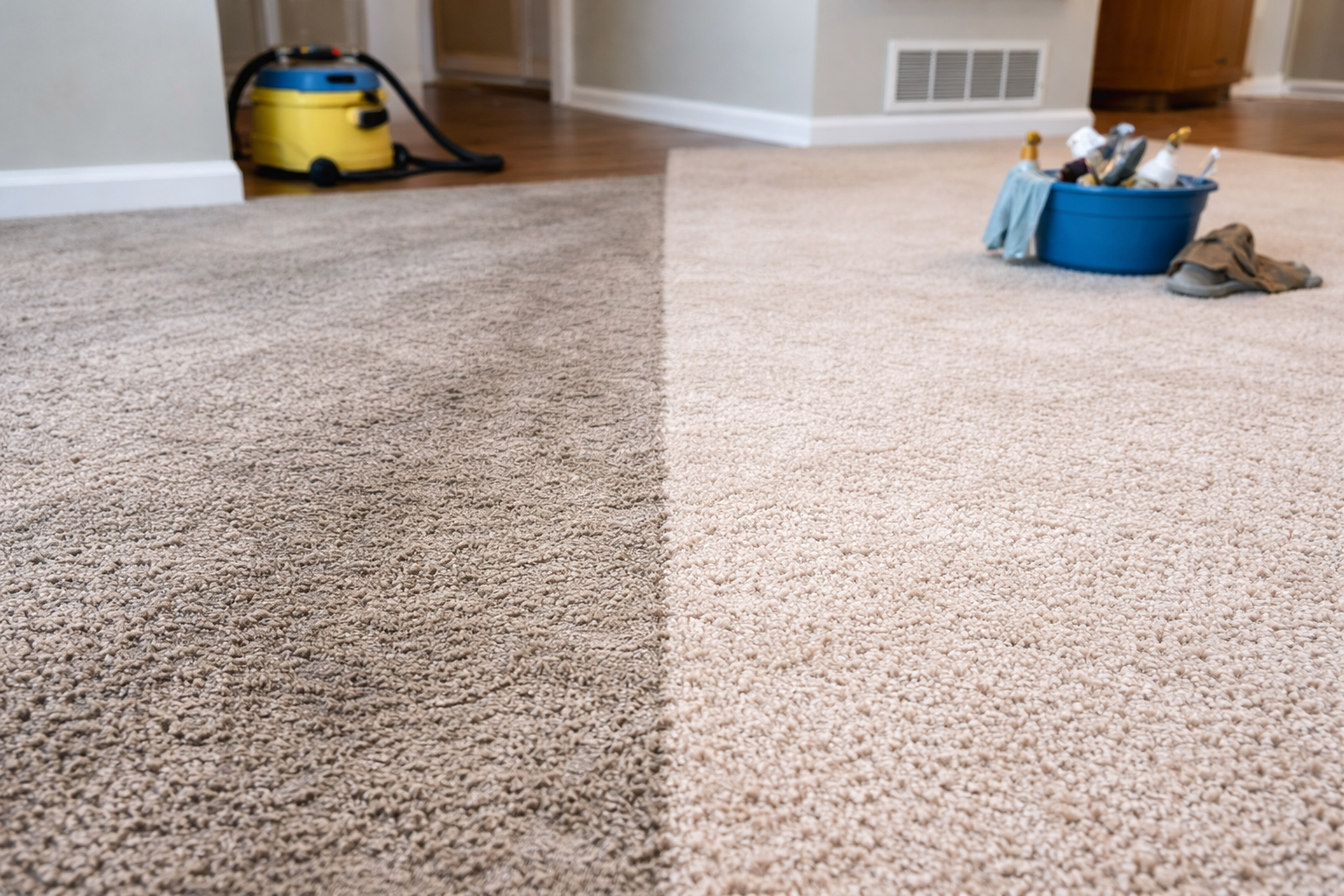
Carpet is usually easier to prorate when the installation date and prior condition are known. Traffic-lane flattening, gradual fiber wear, and fading generally point toward time-driven decline. Burns, tears, penetrating stains, and persistent odor can support a damage finding when the record shows they were not present at move-in.
Even then, full replacement and full charge are separate questions. A carpet may have to be replaced across a larger area for matching or installation reasons while the resident charge remains tied to the remaining value of the damaged material.
Hard-Surface Flooring
Hard-surface flooring introduces two extra questions: cause and scope. Water exposure, gouging, or impact can produce a chargeable condition, but owner-side maintenance can produce similar end-state damage. When the cause may involve a leak, appliance failure, or delayed repair, the first step is separating resident responsibility from the owner's Virginia maintenance responsibilities.
Scope then becomes the betterment question. If a discontinued plank cannot be matched, broader replacement may be operationally reasonable. That does not make every dollar of a new floor resident-caused. The file should show why narrower repair was not feasible and what like-kind restoration would have cost before any owner-selected upgrade.
Full Replacement Does Not Always Mean Full Charge
Owners sometimes make the correct business decision to replace more than the resident should be charged for. Those two decisions should be documented separately.
Consider a rental with damaged carpet that an owner already planned to convert to luxury vinyl plank at the next turnover. The resident's damage may accelerate the project, but the owner's flooring upgrade has its own investment value: longer service life, easier cleaning, different leasing appeal, or lower future turnover friction. Those benefits belong to the owner. A deposit disposition should not hide that capital decision inside a resident damage line.
The same separation helps when a repair is technically possible but economically poor. An owner can choose the durable long-term fix and still calculate the resident charge from the supported restoration loss. That keeps the owner free to improve the asset without making the deposit accounting depend on the improvement choice.
For rental investing, that distinction is useful rather than restrictive. It protects the owner from avoidable disputes while preserving the ability to make sensible capital improvements when a turnover creates the right opportunity.
Documentation Before the Math
Proration becomes much easier when the useful-life inputs exist before move-out. The file should answer six questions:
- When was the item installed? Keep invoices, turnover records, or other dated proof.
- What condition was it in at move-in? Use written notes and clear photos, not memory.
- What changed during the tenancy? Identify the specific damage mechanism and location.
- What repair scope was feasible? Record whether patching, partial replacement, matching, or blending could work.
- What would like-kind restoration cost? Separate the resident loss from an owner's upgrade specification.
- What ordinary aging was already present? Account for pre-existing wear instead of assuming every remaining year had full value.
Virginia Code § 55.1-1214 requires a written move-in condition report and provides several ways to complete it. PMI James River allows residents to complete the move-in inspection by app or on paper, with the written condition notes and photos treated as one baseline record. That matters later because an age calculation is weak if the starting condition is unknown.
Our operating rule is simple: a smaller charge that can be shown line by line is better than a larger charge built on assumptions. The goal is not to leave valid money on the table. It is to keep each deduction tied to evidence the owner can explain without reconstructing the file after the resident disputes it.
Richmond-Area Examples
Henrico County: Older Carpet, Localized Damage
A Henrico rental has carpet with a documented installation date five years before move-out. Most of the home shows ordinary traffic wear, but one bedroom has a deep stain that reaches the pad. The owner may decide full replacement is the practical turnover choice. The deposit analysis should still separate the ordinary five years of use from the remaining value lost because of the localized stain.
Richmond City: Repaint Was Already Coming
A Richmond City rental has widespread fading and ordinary scuffs after a multi-year tenancy, plus one wall with substantial adhesive damage that tears the drywall paper. If the unit was already due for repainting, the full paint bill is a weak damage charge. The stronger line item is the incremental patching and preparation created by the adhesive damage, supported by photos and scope notes.
Chesterfield County: Discontinued Flooring and an Upgrade
A Chesterfield rental has several damaged planks, and the existing product is discontinued. The vendor documents that a visually acceptable local match is unavailable. The owner chooses a higher-grade replacement across the room. Broader replacement scope may be justified, but the resident charge should still be based on the documented remaining value and a reasonable like-kind restoration basis rather than automatically shifting the premium upgrade cost to the resident.
Hanover County: Age Cannot Be Proved
A Hanover rental has damaged flooring, but the owner cannot find an installation invoice and the move-in record shows that the surface was already visibly worn. The weak move is to invent an age and run a precise formula. The stronger move is to use the evidence that actually exists, narrow the scope where possible, and make a conservative charge that can be supported.
Frequently Asked Questions
Does Virginia Require Landlords to Prorate Security Deposit Deductions?
Virginia Code § 55.1-1226 does not prescribe a useful-life table or a mandatory proration formula. It allows defined deductions, including qualifying damages less reasonable wear and tear. Proration is a practical way to estimate remaining value after responsibility and scope have been established.
What If the Installation Date Is Unknown?
Do not manufacture precision. Look for prior invoices, inspection photos, turnover records, vendor estimates, listing photos, or other dated evidence that can establish a reasonable range. If the age and starting condition remain uncertain, the charge should reflect that uncertainty rather than assume the item was new.
Can an Owner Charge Full Replacement Cost for a New Item?
Potentially, if the item was new or nearly new, the resident caused a loss beyond reasonable wear and tear, full replacement was actually required, and the cost reflects like-kind restoration rather than an upgrade. The specific evidence still controls. Useful life does not impose a discount when the item genuinely retained most of its value.
Does a Matching Problem Justify Replacing a Whole Room?
It can justify broader operational scope when the matching constraint is real and documented. The owner should preserve vendor notes, product availability information, and the reason partial repair would not produce a reasonable result. The charge still has to separate remaining value from any owner-selected improvement.
Conclusion
The useful-life question is not "How much did the new replacement cost?" It is "What supported value did the resident-caused loss actually remove?" Virginia law sets the boundary by excluding reasonable wear and tear. The owner then needs records that show age, starting condition, damage mechanism, repair feasibility, and like-kind cost.
Handled that way, proration protects both sides of the investment decision. It keeps deposit deductions defensible without forcing owners to avoid sensible turnover upgrades. Richmond-area owners can restore what was damaged, invest where the property benefits, and keep those two costs separate on the ledger.
Next Step
PMI James River helps rental owners in Richmond City, Henrico, Chesterfield, and Hanover build the inspection, maintenance, and closeout records that make these decisions easier to support. Learn more about our maintenance coordination and documentation process.
Published: June 3, 2026