
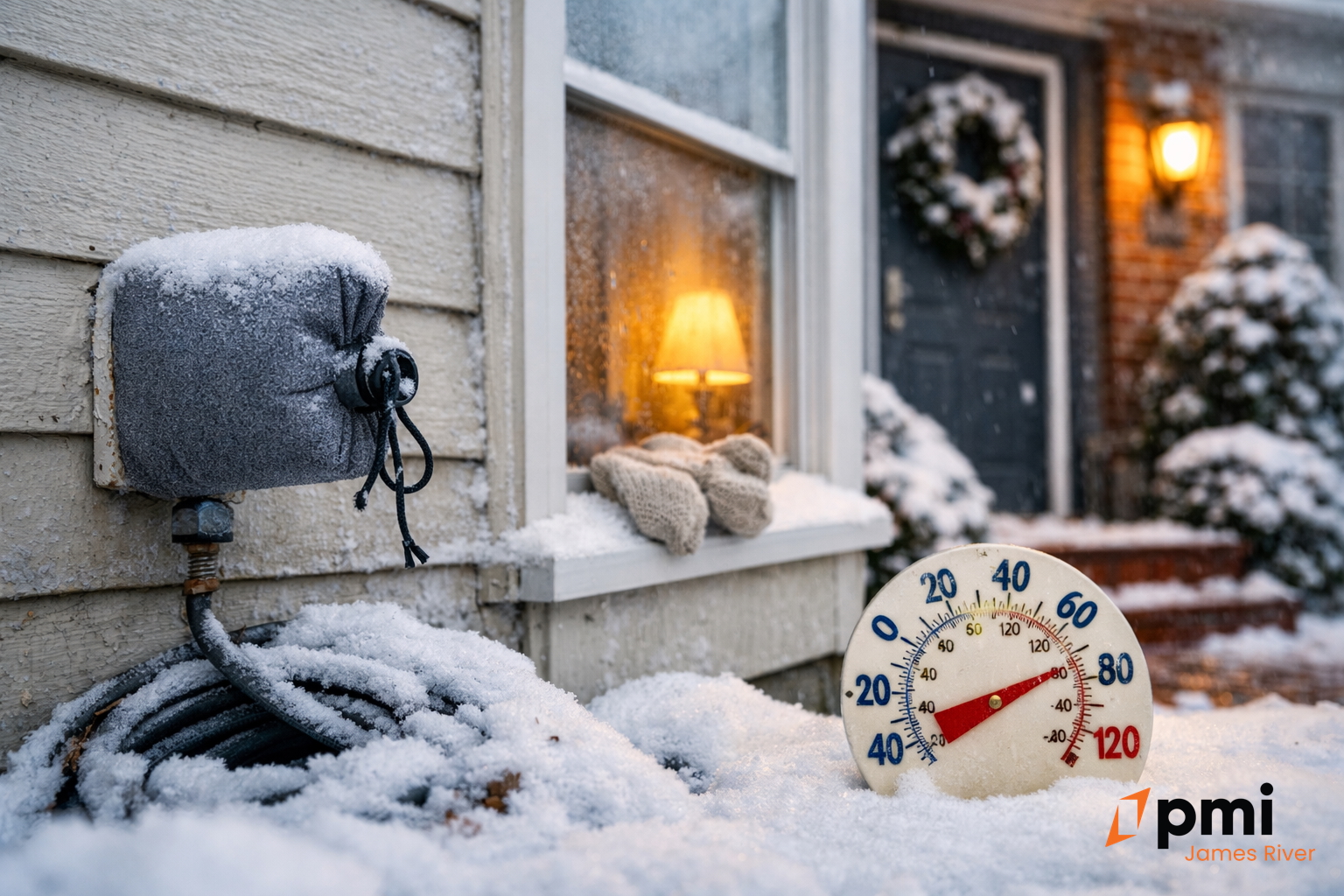
A frozen pipe can start as a small change at one faucet and become a water-damage problem after the line thaws. In a Richmond rental, the safest approach is to know which plumbing is more exposed, take the simple prevention steps that apply to your home, and report warning signs early instead of trying to diagnose or repair the pipe yourself.
PMI James River's Resident Maintenance hub covers maintenance requests and emergency procedures. This article focuses specifically on frozen pipes. For other leaks, drains, toilets, water-pressure, or hot-water problems, use our Plumbing & Water Problems guide. For the broader seasonal framework, see Seasonal Maintenance for Richmond Renters.
Key Takeaways
- Keep the heat and utilities on during freezing weather, and follow any property-specific freeze instructions PMI James River sends.
- Pipes are more vulnerable in exterior walls and unheated areas such as crawl spaces, basements, garages, attics, and some sink cabinets.
- During very cold weather, opening a cabinet around exposed plumbing or letting a vulnerable faucet drip may be appropriate for that home.
- A faucet that suddenly slows to a trickle or stops can be an early sign of a frozen line.
- Do not use an open flame or improvise a thawing method. Report a suspected frozen pipe promptly. If water is actively flowing and cannot be safely stopped or contained, use PMI James River's emergency maintenance procedure.
Know Where Pipes Are Most Exposed
The American Red Cross frozen-pipe guidance identifies outdoor hose connections, pipes in unheated basements, crawl spaces, attics, garages, kitchen cabinets, and pipes along exterior walls as common freeze locations. Richmond's Department of Public Utilities gives similar local guidance for outdoor pipes and plumbing in unheated basements, crawl spaces, and garages.
In PMI James River's mostly single-family rental portfolio, plumbing exposure varies from one home to another. A house over a crawl space and a home with plumbing through a garage may need different freeze-night steps. Prior freezing is also important information.
If you know a particular sink, wall, crawl-space line, or hose connection has caused trouble before, mention it when you contact us. Property-specific history is more useful than assuming every faucet in the home needs the same treatment.
Video note: This Old House demonstrates why frozen pipes can burst and shows general freeze-prevention concepts. PMI James River residents should follow the property-specific directions below and should not perform pipe insulation, heat-tape installation, or other plumbing alterations unless specifically directed or approved.
What to Do Before and During a Freeze
Routine winter plumbing protection should be consistent. Keep the heat and utilities on, use the plumbing normally, follow any cold-weather notice sent for your property, and report loss of heat or leaks promptly.
If you will be away during cold weather, do not shut the heat off. PMI James River's winter instructions use 55°F as the minimum thermostat setting when you are away. The City of Richmond's winter pipe guidance also recommends no lower than 55°F when away.
During very cold weather, property-specific instructions may tell you to open a sink cabinet so warmer room air reaches the plumbing or to let a faucet served by exposed piping drip slightly. The Red Cross and Richmond DPU both recommend these measures for vulnerable plumbing. This does not mean every faucet should run. Follow the directions for your property and focus on plumbing that is actually exposed.
If outdoor hose care is assigned to you, disconnect hoses before freezing weather. Richmond DPU specifically includes hose disconnection in its winter pipe guidance. Do not attempt insulation, heat tape, pipe alterations, or other plumbing work unless PMI James River has specifically directed or approved it.
Key point: For most occupied PMI James River homes, frozen-pipe prevention is normal resident behavior, not a repair project. Keep heat and utilities on, follow the freeze notice for the home, and report loss of heat, unusual water flow, or leaks promptly. Homes with prior freeze history, exposed plumbing, inadequate insulation, vacancy, or another known vulnerability may need additional property-specific action.
Watch for a Frozen Line and Know What to Do Next
If you turn on a faucet during freezing weather and only a trickle comes out, the Red Cross says to suspect a frozen pipe. A fixture that suddenly stops flowing can point to the same problem.
Useful warning signs include:
- A faucet that suddenly has very little or no flow.
- A noticeable drop in water pressure at one fixture.
- Visible frost on an accessible exposed pipe.
- New dampness, staining, or water where it should not be.
- Loss of heat during freezing weather, which increases the risk to exposed plumbing.
Check whether other faucets still have normal flow, but do not spend a long time trying to prove where the pipe is frozen. Submit a request through the Resident Portal and tell us which fixture is affected, whether other fixtures work normally, whether the heat is working, when the change started, and whether you can see any moisture or leaking.
What to Do if a Pipe May Be Frozen or Has Burst
If you suspect a frozen pipe and there is no active uncontrolled leak, report it promptly through the Resident Portal. Do not use a torch, propane heater, kerosene heater, or any other open-flame device. The Red Cross specifically warns against open-flame thawing methods.
Although general homeowner guidance may describe ways to apply heat to an accessible frozen pipe, PMI James River residents should not improvise a thawing method in a managed rental. Portable space heaters are not permitted, and an incorrect thawing attempt can create fire, electrical, or water-damage risk. Tell us what you are seeing and follow the instructions provided for the property.
If a Pipe Bursts or Water Starts Flowing
Water near electrical equipment: If water has reached or is close to an outlet, switch, light fixture, electrical panel, supplied appliance connection, or other energized electrical equipment, do not approach or cross the wet area. Stop the normal plumbing path and follow the Electrical Warning Signs guide.
If there is no electrical hazard and the shutoff is safely accessible: close the nearest fixture shutoff or the home's main water valve. Do not force a seized valve or enter an unsafe area.
If the water stops and the situation is contained: submit a maintenance request promptly through the Resident Portal and tell us what happened and which valve you closed. The Water Leaks & Shutoffs guide covers the broader leak and containment path.
If the water cannot be safely stopped or contained: follow our rental emergency procedure. Call 804-916-5153, select Option 3, then Option 1. If there is an immediate threat to life or safety, call 911 first.
```Frozen Pipe FAQs
Should I leave every faucet dripping?
No. Dripping is most useful for a faucet served by exposed or vulnerable plumbing during very cold weather. Follow the freeze instructions for your property rather than running every faucet automatically.
What thermostat setting should I use if I leave town?
PMI James River's winter instructions use a minimum of 55°F during cold weather when you are away. Do not shut the heat off.
What if only one faucet stops working?
That can point to a localized frozen line. Check whether other fixtures have normal flow and report which fixture is affected, when it changed, and whether the heat is working.
Can I thaw a frozen pipe myself?
Do not improvise a thawing method in a PMI James River rental. Do not use an open flame, and do not use a portable space heater. Report the suspected frozen line and follow the property-specific instructions you receive.
What if the heat stops working at the same time?
Report the heating problem promptly through the Resident Portal and include the thermostat setting, whether the system is producing any warm air, and what basic checks you already completed. Loss of heat increases the risk of frozen plumbing, but loss of heat by itself is not an after-hours maintenance emergency. Use our Emergency vs. Urgent vs. Routine Maintenance guide to understand how PMI James River classifies the situation. If a separate condition develops, such as a burst pipe with uncontrolled water, a gas odor, smoke, sparking, or another active hazard, follow PMI James River's emergency maintenance procedure.
Frozen-pipe prevention is easier when the routine is predictable: keep the home heated, follow the cold-weather instructions for your property, pay attention to changes in water flow, and report a suspected freeze or leak early. For the broader rhythm of cold-weather and seasonal maintenance, use our Seasonal Maintenance for Richmond Renters guide.
For portal access and other everyday resident tools, our Resident Resources page remains the broader starting point.
Published: December 21, 2025
Updated: August 31, 2026