
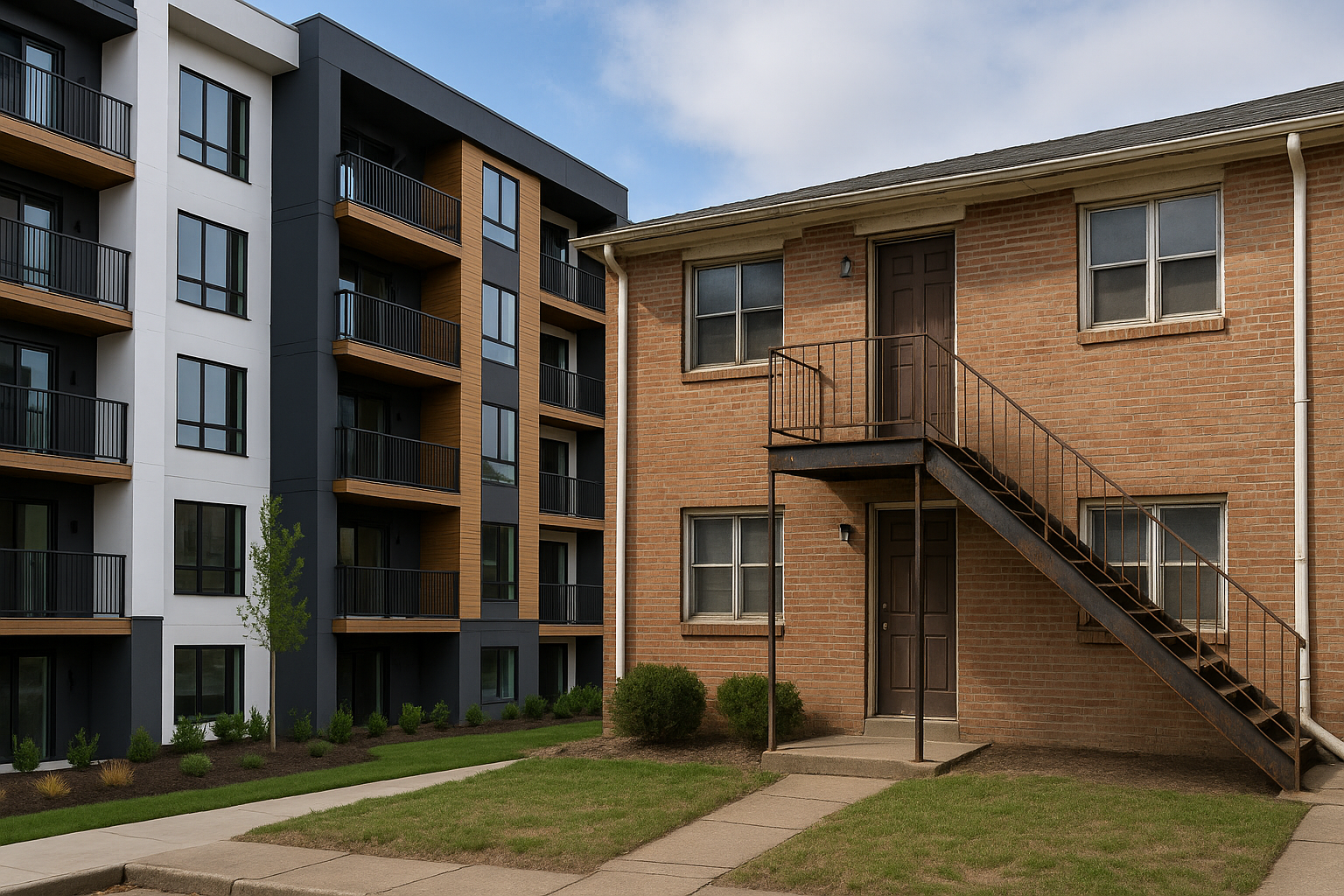
Richmond’s multifamily market is changing, but the change is more measured than the old version of this article suggested. New apartments are still being delivered, large professional operators have raised the standard for pricing and presentation, and renters have more choices. For investors evaluating an acquisition or repositioning, PMI James River’s Richmond investment services can help put those market signals into the context of a specific property.
The bigger mistake is assuming that new Class A supply makes older multifamily obsolete. It does not. Class B and Class C properties can still compete when the purchase basis, achievable rent, capital plan, and operating model fit the actual property. That property-level discipline is also central to finding good real estate investment deals in Richmond.
For Richmond multifamily investors, the useful question is no longer whether new construction is coming. It is how a specific older property should be priced, maintained, marketed, and underwritten while that new supply is being absorbed.
Key Takeaways
- Richmond is still absorbing new multifamily supply, but current data does not show a broken market. Vacancy has remained in a relatively narrow range while rents have continued to grow.
- Class B and Class C rent growth recently outpaced Class A, which is important evidence that demand extends beyond newly built communities.
- Older properties do not need to imitate luxury communities. They need a clear value proposition built around realistic pricing, reliable condition, practical features, strong marketing, and consistent operations.
- Investors should underwrite effective rent, concessions, unit condition, deferred maintenance, capital needs, and submarket competition before assuming a renovation will create a particular rent premium.
Richmond Has More Supply, Not a Broken Multifamily Market
The construction wave is real. Virginia REALTORS reported that Richmond, along with Northern Virginia, had one of the Commonwealth’s largest shares of new multifamily construction in the second quarter of 2026. Statewide deliveries increased while the construction pipeline declined slightly, showing both continued near-term supply and some moderation in what is coming behind it. The Virginia REALTORS Q2 2026 multifamily update provides that broader context.
Richmond-specific data is more reassuring than the old article’s roughly 9% vacancy claim. Northmarq’s Q1 2026 Richmond multifamily report put vacancy at 7.2% and projected a modest rise to about 7.7% as roughly 3,300 additional units deliver. Northmarq also reported that Richmond vacancy had generally remained in the high-6% to low-7% range since early 2023 because absorption had largely kept pace with new supply.
The most important detail for owners of older properties is that Class B and Class C rent growth outpaced Class A on both a quarterly and annual basis. Chesterfield, East End, Eastern Henrico, and Midlothian were among the submarkets where Northmarq reported annual rent growth above 2%.
That does not mean every older building is protected from competition. It means the market is more nuanced than “new apartments are crushing older stock.” A metro average also should not be used as a shortcut for a property in Richmond City, Henrico, Chesterfield, or Hanover. Investors still need a real comp set for the location, condition, unit mix, and price point. PMI James River’s broader Richmond rental market update tracks the wider leasing environment around those property-level decisions.
New Supply Changes the Comparison Set
A resident does not need to live in a new Class A community for new construction to affect an older property. New communities influence the alternatives visible during the search. They can change what renters see in listing photos, what features are easy to filter for, how quickly leasing teams respond, and what effective rent looks like after concessions.
That comparison happens online before many prospects ever schedule a tour. In a 2026 survey of nearly 27,000 U.S. renters, Apartments.com found that 99% considered unit-specific information important and 74% wanted online photos of the exact unit they were considering. Price remained the leading consideration, and 88% said a discount or gift would make them more likely to consider a property. The same survey found that practical unit features mattered heavily, including air conditioning, in-unit laundry, and off-street parking. Those findings are detailed in the Apartments.com Q2 2026 renter survey.
Institutional ownership is part of the Richmond multifamily backdrop, but the operational lesson is broader than who owns the building. Renters experience competition through price, presentation, amenities, communication, and service. Smaller owners do not need the same capital budget as a large operator, but they do need to understand what the prospect is comparing.
| Competitive Factor | What Newer Communities May Offer | Practical Response for an Older Property |
|---|---|---|
| Price | Concessions or promotional effective rent | Compare effective rent, not only advertised rent |
| Presentation | Exact-unit photos, floor plans, strong digital listings | Show the actual unit clearly and make the listing easy to evaluate |
| Amenities | Large amenity packages and newer finishes | Prioritize practical features that fit the property and target rent |
| Condition | New systems and recently completed interiors | Resolve maintenance and turn issues before spending heavily on cosmetics |
| Operations | Dedicated leasing and maintenance systems | Compete with responsiveness, documentation, and predictable service |
How Class B and Class C Owners Can Compete
Price Against Real Substitutes
An acquisition pro forma or rent comp is only useful when the comparable property is actually comparable. A renovated unit with newer systems, in-unit laundry, parking, and current finishes may sit in the same ZIP code as a dated unit without those features, but that does not make the rents interchangeable.
Owners should compare condition, effective rent after concessions, unit size, practical features, location, and the current supply competing for the same renter. The same principle applies when estimating what a Richmond rental can realistically rent for. Testing the upper end of a supportable range can be rational. Holding to a number the market does not support usually is not.
Fix Reliability Before Chasing Luxury
Older multifamily does not become competitive because every unit receives quartz counters or smart-home equipment. Mechanical reliability, water intrusion, HVAC performance, electrical issues, plumbing, roofs, and turn quality come first. An attractive renovation cannot compensate for a property that repeatedly creates maintenance friction.
This is also where acquisition underwriting and property management meet. A buyer who budgets only for visible finishes can miss the capital work that determines whether the property is actually ready to support the projected rent. PMI James River’s guidance on deferred maintenance and rental performance addresses that operating risk in more detail.
Make the Actual Unit Easy to Evaluate
In PMI James River’s leasing work, prospects often compare several rentals in a short period. Small issues an owner has learned to tolerate can become the reason a prospect chooses another property. That makes the unit’s condition and the quality of the listing part of the same leasing decision.
A strong listing should show the actual property clearly, explain the features without overstatement, make pricing easy to understand, and give the prospect a simple path to the next step. The goal is not to make an older unit look like new construction. It is to make its real value easy to see. Our rental marketing process explains how presentation and leasing response work together.
Use Practical Features Strategically
Some improvements can expand the prospect pool even when they do not produce a clean dollar-for-dollar rent premium. Laundry, parking, air conditioning, durable finishes, and a workable pet policy can matter because they affect whether a renter keeps considering the unit at all.
The right decision depends on cost, layout, building systems, and the competing set. Owners should not add amenities simply because a new apartment community has them. Pet policy is a good example: a clear, consistently applied approach can widen the eligible prospect pool without requiring an expensive physical upgrade. PMI James River’s Richmond pet policy guidance covers that decision separately.
What Multifamily Investors Should Underwrite Before Buying or Repositioning
The current Richmond market still supports investment across different asset classes, but the spread between stabilized Class A properties and value-add Class B and C assets matters. Northmarq reported stronger first-quarter 2026 sales volume than any first quarter since 2022 and continued investor demand across a range of strategies. That is opportunity, not permission to use optimistic assumptions.
- Achievable rent: Use condition-matched comps and adjust for concessions, not simply asking rents.
- Vacancy and lease-up: Model enough time for the actual unit and submarket rather than assuming every renovated unit leases immediately.
- Capital needs: Separate cosmetic upgrades from roofs, plumbing, electrical, HVAC, moisture issues, and other major systems.
- Feature gaps: Identify which missing features reduce the prospect pool and which are merely nice to have.
- Operating execution: Account for turn speed, maintenance response, resident communication, renewal process, and leasing follow-up.
- Exit assumptions: Do not assume Class A valuation or rent performance will automatically translate to a value-add property after a modest renovation.
A property can be a good investment without being the newest building in its submarket. The more useful question is whether the purchase basis and capital plan leave enough room to offer a product renters will choose at a rent the market will support.
Richmond’s current multifamily data supports a more balanced conclusion than the old article. New supply is creating real competition, but Class B and Class C demand has not disappeared. Owners who price accurately, fix the right things, present units well, and operate consistently can still have a strong place in the market.
For investors evaluating a Richmond multifamily acquisition or deciding how much to put into an existing property, PMI James River can help review the rental assumptions, competitive set, and operating plan through our investment services.
Published: December 8, 2025
Updated: August 21, 2026