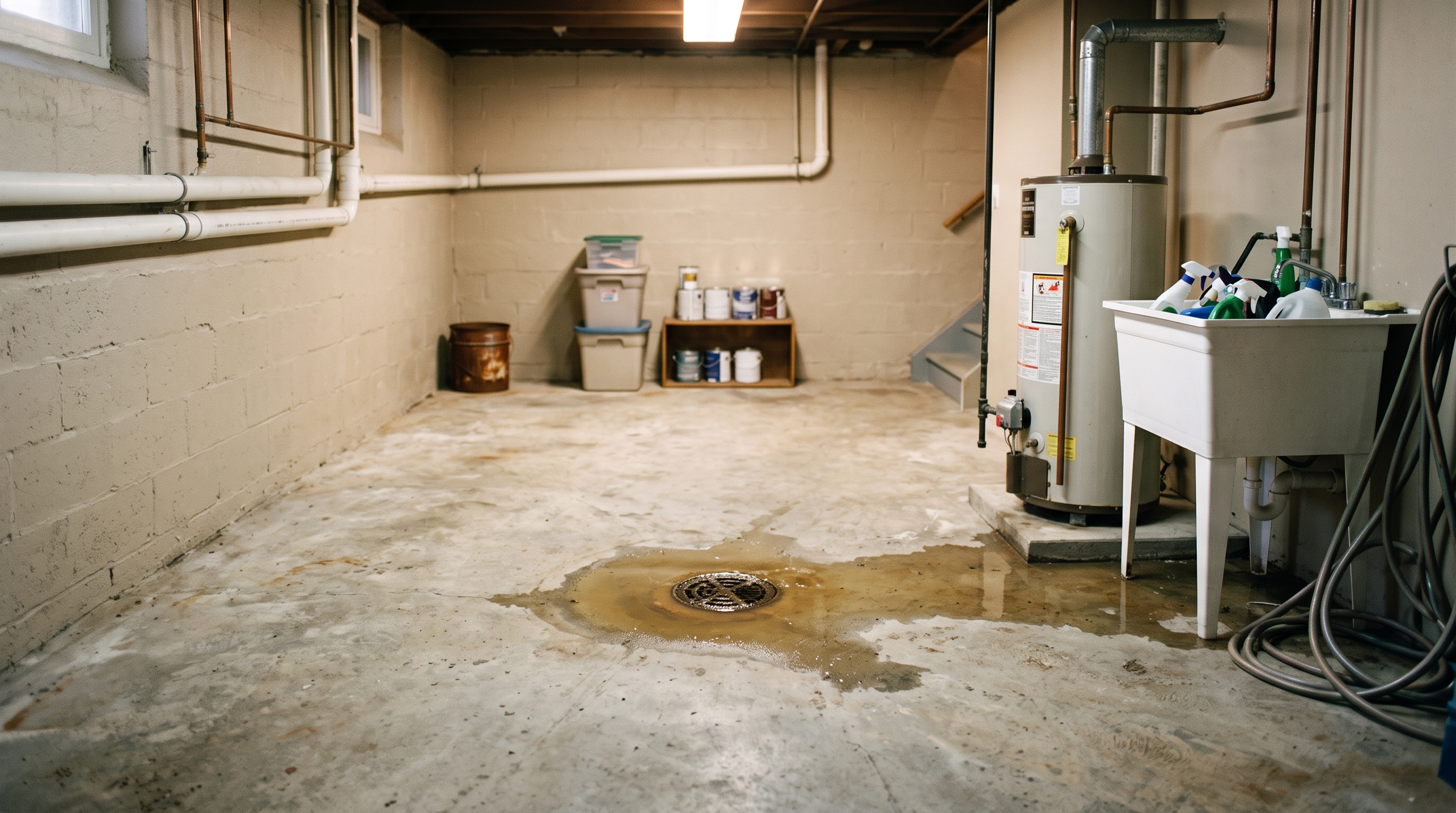
When sewage comes up through a toilet, tub, shower, floor drain, or other drain in a rental property, owners may call it sewage backflow, a sewer backup, or a drain backup. Whatever the label, the first job is the same: stop the event from getting worse, keep people away from contaminated water, and determine whether the problem is inside the property, in the private sewer line, in a public sewer, or in a septic system.
For Richmond rental owners, this is exactly the kind of event that benefits from a structured rental maintenance and repair process. PMI James River's rental maintenance operations framework separates immediate stabilization from diagnosis, owner decisions, permanent repair, and closeout. A sewage backup compresses that sequence because contamination and property damage can increase quickly.
Key Takeaways
- Sewage entering occupied or finished space should be treated as an emergency condition, not placed in a normal repair queue.
- The first objective is stabilization: stop unnecessary water use, keep people and pets away from contaminated areas, and get the appropriate responders moving.
- A plumber, public utility, and water-mitigation or restoration company may have different jobs. Clearing the line does not automatically complete the cleanup.
- Do not decide who caused the backup or who ultimately pays before the source and failure point are documented.
- After the immediate event, review the repair history, insurance coverage, and whether a property-specific prevention measure is justified.
1. Stabilize the Sewer Backup Before Trying to Diagnose It
PMI James River's maintenance triage standard for Richmond rentals treats sewage entering living space as an emergency because waiting can increase both health exposure and property damage.
The first response should focus on containment rather than figuring out who is responsible. Residents should stop unnecessary water use, avoid the affected area, and keep children and pets away from wastewater. They should not be asked to handle sewage, open sewer cleanouts, disassemble plumbing, or enter contaminated standing water to investigate the cause.
If wastewater has reached electrical equipment, cords, outlets, appliances, or another energized area, keep people out of that area. Electrical isolation should not require someone to stand in contaminated water or touch equipment that may be energized.
Virginia law reinforces why this belongs high in the priority queue. Virginia Code § 55.1-1220 requires landlords to maintain supplied plumbing and sanitary facilities in good and safe working order and to keep rental premises fit and habitable. The current rent-escrow statute also identifies a lack of adequate sewage disposal facilities as a condition that can present a serious threat to health or safety.
The practical lesson is simple: stabilization comes before debating the invoice.
2. Determine Whether the Failure Is Private, Public, or Septic
Not every sewage backup has the same cause. That distinction matters because it determines which contractor or utility needs to act, what permanent repair may be necessary, and who ultimately controls the failed infrastructure.
The intake should establish several facts quickly:
- Which fixtures or drains are affected?
- Is only one fixture blocked, or are several drains backing up?
- Is sewage actively entering the property?
- Did the problem begin during or immediately after heavy rain?
- Does the property use public sewer or an onsite septic system?
- Has the property had a similar backup before?
- Has a plumber previously identified roots, damaged piping, recurring blockages, or another known condition?
Richmond Metro properties do not all sit in the same wastewater environment. The City of Richmond's combined sewer system covers roughly one-third of the city and carries both stormwater and wastewater through the same system in older central areas. Richmond DPU specifically identifies a sewer backup into a home or building as an event that should be reported to the utility.
That does not mean a Richmond City backup is automatically a City problem. A private sewer lateral can still clog or fail. Wet weather is context, not a diagnosis.
The same private-versus-public distinction exists elsewhere in the metro. Henrico County Public Utilities identifies the property line as the general responsibility boundary for single-family water and sewer service. Chesterfield County Utilities likewise states that the County maintains wastewater lines to the property line while lines on the property are the owner's responsibility.
A plumber may therefore be working at the same time a locality is checking public infrastructure. For a septic property, the diagnostic path changes again.
The important owner rule is not to guess which side failed. Get the failure point documented.
3. Treat Plumbing Repair and Sewage Cleanup as Two Separate Workstreams
Stopping the backup does not necessarily restore the property.
A plumber may clear a blockage, identify a failed line, or restore drainage. That solves the source problem. It does not automatically address sewage that has already contacted flooring, drywall, cabinets, baseboards, insulation, personal property, or other building materials.
The U.S. Environmental Protection Agency recommends using a professional experienced with contaminated-water damage when water or mold damage was caused by sewage or other contaminated water.
For a meaningful sewage intrusion, the response may therefore require two coordinated scopes:
- Source control and plumbing: stop the backup, restore drainage, identify the failure point, and determine the permanent plumbing repair.
- Contamination and restoration: remove contaminated material where necessary, clean and disinfect affected areas, dry the building, and document the restored condition.
This distinction prevents a common closeout mistake: receiving a plumbing invoice and assuming the entire event has been resolved while contaminated or wet building materials remain behind.
4. Make Insurance and Responsibility Decisions After the Facts Exist
A sewer backup can create three different financial questions: who pays the emergency vendors now, whether insurance applies, and whether another party may ultimately be responsible for some or all of the cost. Those questions do not have to be answered at the same time.
Virginia's State Corporation Commission advises property owners to review water and sewer backup protection because applicable insurers are required to offer optional coverage for water backing up through sewers or drains. Actual coverage still depends on the policy form, endorsements, limits, exclusions, and cause of loss. Owners should not assume that a standard property policy or flood policy automatically covers every sewer backup.
PMI James River's landlord insurance renewal checklist emphasizes reviewing endorsements and property-specific exposures before the claim occurs. A sewer backup is a good example of why that detail matters.
During an actual loss, preserve useful photographs, vendor findings, invoices, and timelines. If the damage is substantial enough that insurance may be involved, notify the appropriate insurance professional promptly. Emergency mitigation should not be delayed simply because an adjuster has not yet inspected the property.
Responsibility should also follow evidence rather than assumption. A backup could involve a private line obstruction, damaged piping, a public sewer condition, septic malfunction, or an occupant-use issue. Even when resident-caused material is eventually found, the immediate repair and contamination problem still has to be stabilized first.
PMI James River's operating approach is to separate the repair decision from the reimbursement decision. The vendor diagnosis should establish what failed and where before the file becomes a charge-allocation argument.
5. Close the Event Properly and Reduce the Chance of a Repeat
A sewer backup should leave behind more than a paid invoice. The property file should make the event understandable later without requiring the owner or manager to reconstruct it from memory.
A useful closeout record can include:
- the original resident report and time received;
- photos or video of the initial condition;
- immediate mitigation instructions;
- plumber and utility findings;
- the identified location and cause of the blockage or failure when known;
- restoration or contaminated-water cleanup documentation;
- approved permanent repair work;
- insurance correspondence or claim information when applicable;
- completion photographs and invoices; and
- any recommendation for monitoring, inspection, or preventive work.
A significant sewage backup should also become a trigger for the property's future maintenance plan. PMI James River's guidance on triggered rental property evaluations explains why an unusual water or damage event can justify another condition check even when the next routine evaluation is months away.
For a recurring sewer problem, the right preventive action should follow the actual diagnosis. That may mean correcting a damaged private sewer line, changing a recurring maintenance practice, addressing a septic issue, or asking a licensed plumber whether a backwater valve or another code-compliant protection measure makes sense for that property's configuration.
Do not install a prevention device simply because one backup occurred. The better question is what failed, whether the failure can reasonably recur, and which intervention addresses that specific pathway.
That is consistent with a broader proactive maintenance strategy: use the event to improve the next decision rather than simply closing the work order and forgetting it.
A sewage backup is disruptive, but it does not need to become an unmanaged chain of plumbers, restoration vendors, insurance questions, resident communication, and uncertain responsibility. A strong response stabilizes the property first, diagnoses the correct system, separates repair from contamination cleanup, preserves the evidence, and turns the incident into a better property record for the future.
For Richmond rental owners who do not want to personally coordinate that chain of decisions, PMI James River manages maintenance from initial triage through vendor coordination, owner escalation, documentation, and closeout as part of full-service property management.
Published: September 23, 2026