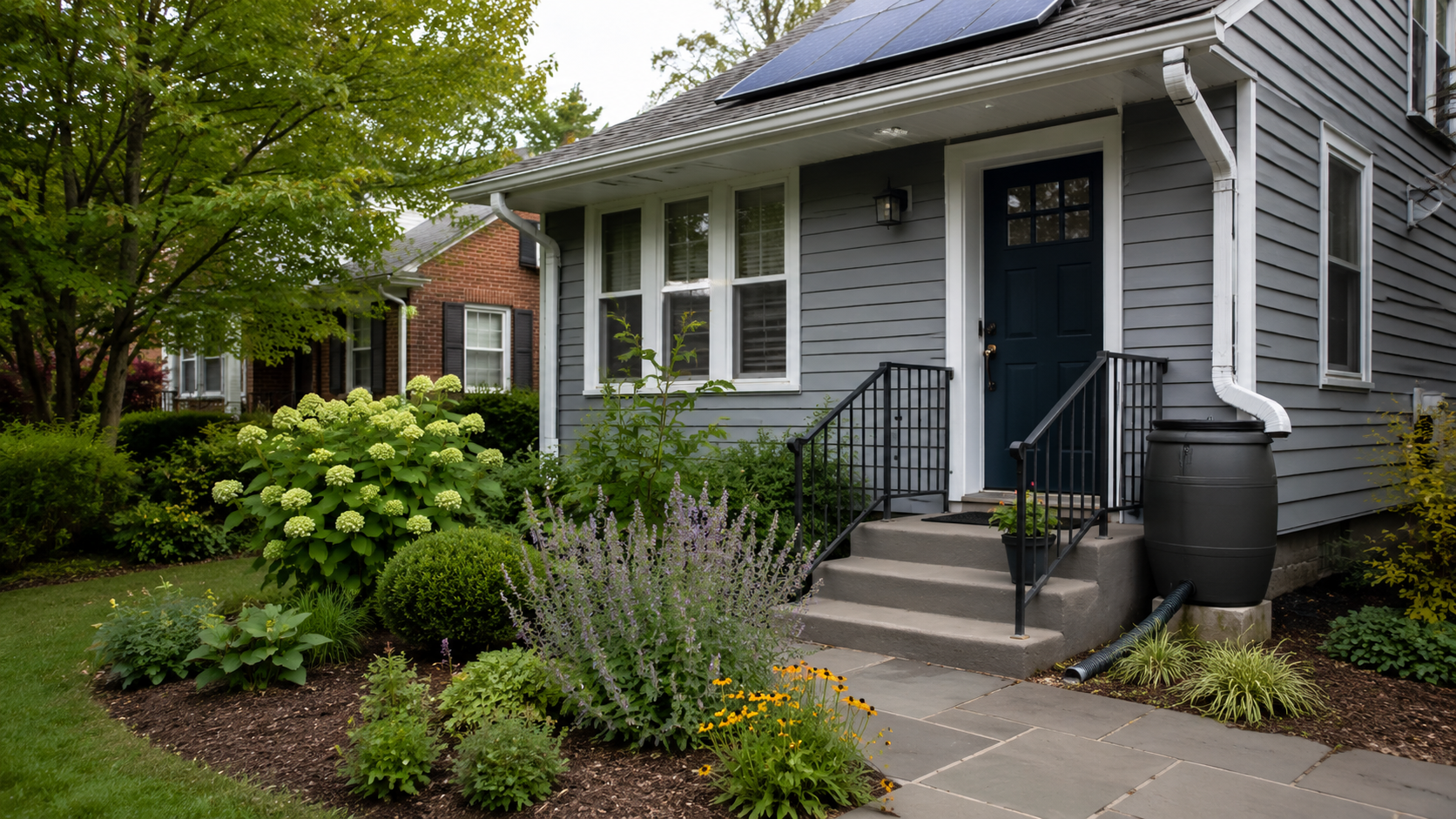
Eco-friendly rental upgrades can be worthwhile, but the label alone does not make an improvement a good investment. For a Richmond rental owner, the better question is whether an upgrade reduces waste, solves a recurring property problem, improves comfort, lowers future maintenance exposure, or helps a replacement last longer.
Those choices also affect how a property competes. PMI James River's Richmond rental marketing process starts with the condition and features the property can actually support, while the Richmond rent-ready baseline separates required operating condition from optional investment above that baseline.
The result is a more useful way to think about sustainability: spend where the property has a real reason to improve, not because an upgrade appears on a generic green-home checklist.
Key Takeaways
- The best eco-friendly rental upgrade solves a specific property problem while also reducing waste, operating demand, or repeat maintenance.
- Air sealing, insulation, HVAC controls, water-efficient fixtures, and leak detection can be more useful than expensive cosmetic "green" renovations.
- Richmond's humidity, summer cooling demand, older housing stock, drainage conditions, and property age should influence the upgrade plan.
- Replacement timing matters. An efficiency upgrade is often easier to justify when an existing component already needs replacement.
- PMI James River evaluates optional improvements against failure history, construction, ownership plans, and repair economics rather than recommending the same list for every home.
Start With the Property Problem, Not the Eco Label
An owner can spend heavily on an efficient product and still make a weak investment decision. The improvement has to solve something that matters at that particular property.
PMI James River generally starts with questions such as:
- Is the property experiencing unusually high heating or cooling demand?
- Are drafts, poor airflow, or uneven temperatures creating repeated complaints?
- Has the property had leaks, moisture damage, drainage problems, or water-heater failures?
- Is one surface or component being replaced repeatedly during turnovers?
- Does landscaping require more irrigation, mowing, pruning, or seasonal work than the property needs?
- Is a major system already approaching replacement, creating an opportunity to choose a more efficient option without discarding useful remaining life?
This is the same logic behind PMI James River's rent-ready standards. Optional asset-protection work should respond to the property's actual failure history, construction, ownership plan, and repair economics. It should not become a mandatory renovation package.
Key point: An upgrade earns its place by solving a real operating problem. Energy savings are useful, but avoiding repeat damage, reducing service calls, or extending a sensible replacement cycle can matter just as much.
Energy and Comfort Upgrades That Can Make Sense
Richmond gives heating and cooling systems plenty to do. Long warm periods, humidity, winter temperature swings, and differences in housing age can make the building envelope and HVAC controls more important than flashy appliances.
Air Sealing and Insulation
Older Richmond City homes may have more opportunities for air leakage around doors, windows, attic penetrations, utility openings, and other parts of the building envelope. Newer suburban homes can have different weak points, but the principle is the same.
The U.S. Department of Energy notes that air sealing and insulation can reduce heating and cooling losses while improving comfort and building durability. For rental owners, simple work such as replacing failed weatherstripping or sealing a known air leak can be easier to justify than replacing windows or opening finished walls solely for efficiency.
Large insulation projects should be timed around the building and the work already planned. If siding, attic work, roofing, or another major project provides access to an area that would otherwise be difficult to reach, the economics can change substantially.
Smart or Programmable Thermostats
Thermostat upgrades can also make sense when the existing HVAC system is compatible and the device remains simple for residents to operate. ENERGY STAR-certified smart thermostats are independently certified using field data to demonstrate energy savings.
The useful rental benefit is not that a thermostat can diagnose every HVAC problem. It cannot. The benefit is better scheduling, clearer temperature control, and access to system-use information on compatible devices.
A thermostat should still be treated as part of the HVAC system, not as a gadget. Compatibility, wiring, resident control, internet dependence, account ownership, and the ability to operate normally without a cloud service all matter.
Efficient Replacement Equipment
Owners should also distinguish between replacing equipment early to chase efficiency and choosing a better replacement when a system has already reached the point where replacement makes sense.
If an HVAC system, water heater, refrigerator, dishwasher, or other supplied appliance is still reliable and economical to operate, immediate replacement may not produce the strongest return. When replacement is already justified by age, condition, reliability, repair history, or market position, energy and water efficiency become useful selection criteria for the new equipment.
Water Control Often Has the Strongest Property-Protection Case
A small amount of wasted electricity affects a utility bill. Water in the wrong place can affect cabinets, flooring, drywall, trim, insulation, crawl spaces, and neighboring finishes.
That makes water control one of the clearest places where efficiency and property protection overlap.
Leak Detection
The EPA's WaterSense program notes that leak-detection and flow-monitoring devices can alert a property owner to unexpected moisture or irregular water use and may reduce water waste and damage from leaks.
For a rental, placement matters more than filling the house with sensors. A device may be particularly useful near a water heater, washing machine, under-sink area, mechanical space, or another location where the property's history shows that a concealed leak could create substantial damage.
PMI James River already treats approved leak detection as a potential asset-protection upgrade. It fits especially well where a prior water event, difficult-to-see plumbing location, finished basement, second-floor laundry, or other property-specific condition increases the consequence of a slow leak.
Water-Efficient Fixtures
When a toilet, faucet, or showerhead already needs replacement, choosing a water-efficient fixture can reduce water use without creating a separate renovation project. That is a different claim from saying that lower water use will automatically prevent clogs or extend pipe life.
The owner should still prioritize reliability, parts availability, proper installation, and normal performance. A theoretically efficient product that creates repeat service calls is not an efficient rental decision.
Drainage Before Devices
Some Richmond water problems are outside the plumbing system entirely. PMI James River frequently pays attention to gutter discharge, downspouts, grading, exterior caulk, crawl-space conditions, and other pathways that allow water to reach the building.
A smart sensor can warn that water arrived. Correcting a known drainage problem can help stop the water from arriving in the first place. Both can be useful, but prevention usually deserves the first look.
Durability Can Be an Eco Upgrade Too
An improvement does not have to contain electronics or carry an efficiency label to reduce waste.
A product that survives several lease cycles, can be repaired cleanly, and does not require premature replacement can reduce material use, vendor visits, turnover work, and ownership cost.
Flooring and Finishes
There is no universal rental flooring that works everywhere. Moisture exposure, subfloor condition, expected traffic, repairability, product quality, installation method, and the surrounding housing stock all matter.
For many rentals, the practical goal is a durable surface that can tolerate normal use and be repaired without replacing an entire home. The same principle applies to paint. PMI James River values documented, consistent paint colors and finishes because future touch-ups and repairs are easier when the product can actually be identified and matched.
Exterior Materials
Roofs, siding, windows, doors, trim, drainage components, and exterior coatings should be evaluated on remaining life and actual condition. Replacing an adequate roof with a premium material simply because the new material may last longer is usually a different decision from selecting a durable roof when replacement is already necessary.
The timing of the decision matters as much as the material.
Lower-Input Landscaping
Richmond rental landscaping should also fit the property rather than a generic curb-appeal template. Where irrigation, mowing, pruning, or replacement planting has become a recurring cost, simplifying beds and choosing plants suited to the site's sun, soil, moisture, and available maintenance can reduce unnecessary inputs.
For a detached home in Henrico, Chesterfield, Hanover, or Richmond City, a smaller, durable planting plan may be more useful than a high-maintenance landscape that looks impressive for one season and creates a continuing service obligation.
Use a Phased Upgrade Plan
The strongest idea from the original version of this article is worth keeping: owners do not need to make every improvement at once.
A phased approach keeps the work tied to the property's operating history.
- Review the record. Look at maintenance invoices, recurring resident requests, utility concerns, water events, turnover repairs, and equipment age.
- Correct active problems first. Leaks, failed seals, drainage issues, unreliable equipment, and other conditions already creating damage or disruption come before optional upgrades.
- Handle low-cost opportunities. Weatherstripping, appropriate LED lighting, accessible shutoff labeling, minor air sealing, and targeted leak detection may fit naturally into normal maintenance or turnover work.
- Use replacement events well. When an appliance, HVAC system, fixture, roof, floor, or other component genuinely needs replacement, compare efficient and durable alternatives before simply buying the closest equivalent.
- Use vacancy for disruptive work. Flooring, insulation access, extensive painting, multi-trade work, and larger building-envelope projects are usually easier to evaluate and coordinate when the home is vacant.
- Track what changed. Keep the invoice, product information, warranty, photos, and relevant utility or repair history so the next decision can use evidence instead of memory.
This approach also fits PMI James River's broader system for proactive rental maintenance. A useful improvement should make the property easier to operate, not simply add another feature that must be maintained.
Frequently Asked Questions
Which Eco-Friendly Upgrade Should a Richmond Landlord Do First?
Start with the property's repeat problems. A home with high cooling demand and obvious drafts may benefit from air sealing or HVAC-control improvements. A property with water history may justify drainage work or leak detection first. There is no single first upgrade for every rental.
Should an Owner Replace Working Appliances With ENERGY STAR Models?
Usually the more useful comparison happens when replacement is already justified. Replacing reliable equipment early creates an additional capital cost that has to be recovered. When an appliance has reached replacement time, efficiency can become one factor alongside reliability, repairability, purchase cost, and expected use.
Are Tankless Water Heaters Automatically Better for Rentals?
No. Tankless equipment can be appropriate in some properties, but installation cost, electrical or gas capacity, water quality, maintenance requirements, service availability, and resident demand all affect the decision. It should be evaluated as a property-specific equipment choice, not as a universal eco upgrade.
Do Smart Thermostats Reduce HVAC Repairs?
They can provide useful scheduling and system-use information, but they do not replace HVAC maintenance or professional diagnosis. A clogged filter, failing component, refrigerant problem, drain issue, or airflow problem still requires the appropriate maintenance response.
Should Every Richmond Rental Have Leak Sensors?
Not necessarily. PMI James River treats leak detection as an optional asset-protection improvement. It becomes more compelling where the location of a leak could allow significant damage before someone notices it.
Next Step
The best eco-friendly rental upgrade is usually not the most impressive product. It is the improvement that fits the property's actual problem, replacement cycle, operating history, and ownership plan.
PMI James River helps owners in Richmond City, Henrico, Chesterfield, and Hanover identify the difference between required work, sensible preventive improvements, and elective upgrades that may or may not justify the cost. Owners evaluating a turnover or improvement plan can contact PMI James River to discuss the property and the decisions that matter most.
Published: October 2, 2025
Updated: August 21, 2026