
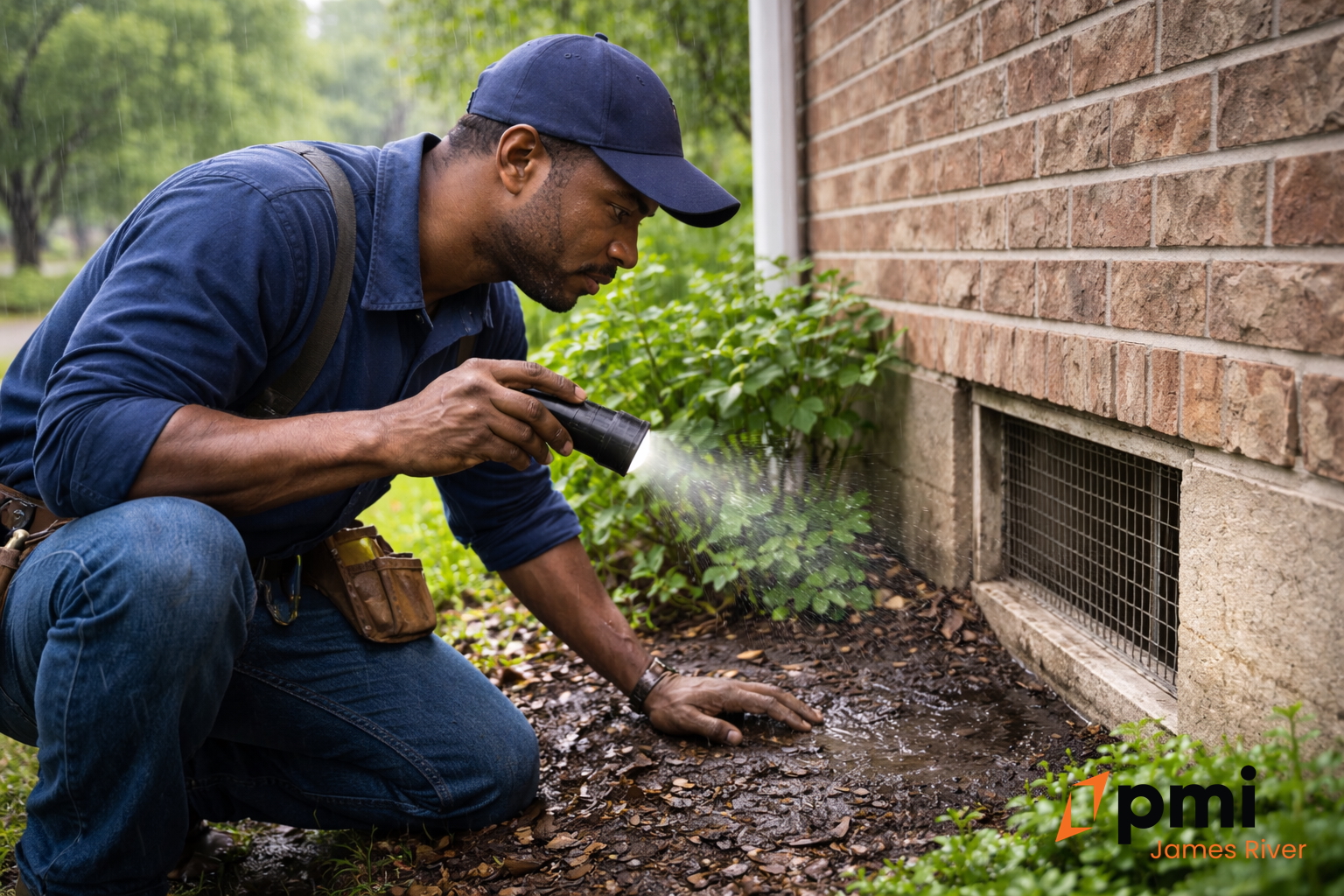
Spring maintenance in Richmond is most useful when it answers a few specific questions before summer removes flexibility. Did winter leave behind a drainage or moisture problem? Does the property shed water the way it should during spring rain? Is the cooling system ready before contractors are dealing with peak-season demand? And which findings need action now rather than another note in the file?
That is a different job from a general property checklist. PMI James River's rental maintenance process is built around finding the mechanism, setting the priority, and documenting the result. Spring fits into the broader Richmond rental maintenance seasons plan because it is the transition point between winter exposure and summer HVAC pressure.
For Richmond City, Henrico, Chesterfield, and Hanover rental owners, the highest-value spring work is usually not a long list of cosmetic tasks. It is a short verification pass that shows where water goes, whether moisture is accumulating, what changed over winter, and what needs to be resolved before the first sustained hot stretch.
Key Takeaways
- Spring should verify how the property handles water, not simply confirm that gutters were cleaned.
- A moisture clue is useful only when the owner or manager works backward to the source and timing.
- Cooling readiness belongs before peak demand, when scheduling and approval delays are easier to manage.
- Spring findings should be separated into fix now, schedule before summer, and monitor or plan.
- Residents can provide valuable observations without being turned into roof, attic, or crawlspace inspectors.
In This Guide
- Spring Is a Verification Season
- Start With What Water Does After Rain
- Trace Moisture Clues Back to a Mechanism
- Prepare Cooling Before the Calendar Tightens
- Sort Findings Into Fix, Schedule, and Monitor
- Turn Spring Findings Into a Usable Record
Spring Is a Verification Season
Winter can leave a rental with conditions that are easy to miss during dry weather. Debris remains in gutters and roof valleys. Downspout extensions move. Soil settles. Sealant opens at transitions. A crawlspace or basement that seemed normal during a cold, dry stretch can behave differently once spring rain and warmer air arrive.
The spring job is to verify performance. Cleaning a gutter is a task. Confirming that the gutter takes roof water to a downspout, that the downspout discharges away from the structure, and that the discharge does not create a new pooling area is a maintenance decision.
Owners who need the full annual inventory can use the complete Richmond rental maintenance checklist. This spring guide goes deeper on what to verify now, why the finding matters before summer, and what should happen next.
Key point: A spring task is not complete because someone visited the property. It is complete when the record shows what was checked, what was found, and whether the finding changes the next maintenance decision.
Start With What Water Does After Rain
Water management is the first spring priority because rain makes hidden weaknesses visible. The useful question is not whether the property has gutters, grading, or a crawlspace vapor barrier. The useful question is whether those systems are doing their jobs under actual wet conditions.
Verify Roof Water Has a Complete Path Away From the Structure
EPA moisture guidance recommends maintaining roof gutters, keeping downspouts and drainage working, and making sure the ground slopes away from the foundation. That is a practical spring sequence for rentals as well. Owners should look for overflow marks, disconnected extensions, erosion channels, repeated wet areas, or places where discharge simply moves water from the roof to the foundation line. EPA's moisture-control guidance supports the same basic approach.
Verification does not require someone to stand on a roof during a storm. Ground-level observation after meaningful rain, safe vendor observation, photographs, and known leak history can usually show whether a closer roof or drainage evaluation is warranted.
Look for Patterns, Not Just Wet Spots
A wet basement corner, crawlspace odor, or ceiling stain matters more when the timing is known. Did it appear after rain? Is it new? Is it in the same location as an older repair? Is the material still wet, or is the owner looking at an old stain? Does the exterior condition line up with the interior symptom?
Properties with known storm exposure or recurring water-entry history should carry those findings into a broader storm-readiness plan for Richmond rentals. Spring is the right time to correct the predictable water path before the next heavy event tests it again.
Trace Moisture Clues Back to a Mechanism
Moisture problems become expensive when the visible symptom gets treated as the diagnosis. A musty smell does not tell an owner whether the source is exterior water entry, plumbing, condensation, a crawlspace condition, poor ventilation, or an HVAC condensate problem. Staining does not tell an owner whether the source is active or historical.
Spring is a good time to build a cleaner decision trail because rain, warmer temperatures, and the return of cooling demand make several moisture mechanisms easier to distinguish.
| Spring Clue | Question That Changes the Diagnosis | Useful Next Step |
|---|---|---|
| Musty odor after rain | Does the odor track with wet weather, one area, or a crawlspace or basement? | Check water routing and the affected area before treating odor alone. |
| Ceiling or wall stain | Is it new, changing, damp, or tied to recent rain? | Establish whether the source is active before repairing finishes. |
| Water near the air handler | Is condensate draining correctly, and is overflow protection working where present? | Treat it as a cooling-system moisture issue until verified otherwise. |
| Persistent foundation pooling | Is roof discharge contributing, or does grading hold water against the structure? | Correct the water path rather than repeatedly treating the interior symptom. |
The practical objective is simple: stop recurrence. Repainting a stain, deodorizing a basement, or replacing a filter can make the immediate symptom disappear while the underlying water or airflow mechanism remains unchanged.
Prepare Cooling Before the Calendar Tightens
Spring cooling preparation is partly mechanical and partly operational. ENERGY STAR recommends annual pre-season HVAC checkups and specifically notes that cooling systems are best checked in spring before contractors become busier in summer. Its HVAC maintenance checklist includes condensate drainage, system controls, coils, refrigerant, and airflow among the items a contractor may evaluate.
For a rental owner, the timing benefit matters as much as the checklist. PMI James River's Richmond-area experience is that peak-season reliability depends on scheduling and authorization discipline as well as equipment condition. Once regional repair volume rises, a delayed owner decision can mean losing a workable service slot and restarting the scheduling process later.
A useful spring cooling baseline should make the summer file easier to interpret. The owner or manager should know the filter strategy, whether there are recurring airflow complaints, whether condensate routing has a history, whether the outdoor unit has adequate service clearance, and whether prior work orders point to the same unresolved symptom.
Richmond pollen can complicate that baseline because filter loading and airflow restriction can create comfort symptoms before there is a major mechanical failure. The separate guide to pollen-season HVAC complaints goes deeper on filter condition, return pathways, and repeat spring airflow issues.
If spring findings show condensate, humidity, or cooling-performance concerns that will matter under longer run times, carry them directly into the summer HVAC and humidity plan. The handoff between seasons should be a continuation of the same record, not a fresh diagnosis in July.
Sort Findings Into Fix, Schedule, and Monitor
One reason seasonal maintenance programs become bloated is that every observation gets treated as equally urgent. Spring is more useful when findings are sorted by what happens if the owner waits.
| Decision | Typical Spring Findings | Why |
|---|---|---|
| Fix now | Active water entry, drainage sending water toward the structure, active plumbing leakage, wet materials, or a cooling-related water problem that is already causing damage. | Delay can expand the scope or create a faster-moving property problem. |
| Schedule before summer | Cooling service, known airflow issues, minor drainage corrections, exterior vent problems, or repairs that are stable now but likely to become harder to schedule under heat or storms. | The condition is controlled, but the calendar will make the same work harder later. |
| Monitor or plan | Cosmetic finish wear after the moisture source is corrected, stable exterior paint aging, landscape improvements, or longer-term upgrades with no active damage mechanism. | The owner keeps the condition visible without displacing higher-value work. |
This approach does not mean cosmetic or long-term asset work is unimportant. It means the owner protects decision quality by solving the conditions that can accelerate before spending on work that is stable and planable.
Turn Spring Findings Into a Usable Record
Occupied rentals create an information advantage when residents know what to report. A resident may be the first person to notice a new stain, a musty odor after rain, a slow drip, weak airflow, water near an HVAC unit, or a change in how one room feels.
For this spring workflow, the useful resident role is to report observable changes. Residents do not need to climb onto roofs or enter attics, crawlspaces, or unfamiliar mechanical areas to make the maintenance process work. The owner, property manager, or appropriate vendor can decide what access and diagnosis are needed.
Keeping those roles clear also makes seasonal communication more useful. The owner-side plan can focus on drainage, equipment, vendors, approvals, and follow-up, while the spring maintenance guide for Richmond renters gives residents a separate framework for routine home care and reporting.
A useful spring closeout record should make the first summer maintenance call easier to diagnose. It should answer:
- What condition was observed, and where?
- Was the condition active, historical, or weather-dependent?
- What did the vendor or manager verify?
- What work was completed?
- What was intentionally deferred, and why?
- What event should trigger another look, such as the next heavy rain or the first sustained cooling period?
That last question is where seasonal maintenance becomes a system instead of a calendar. If a downspout extension is corrected, the next rain verifies the result. If an HVAC concern is stable in April, the first sustained warm period tests whether it stays stable. If a stain is dry and the source appears corrected, the next storm helps confirm whether the repair held.
PMI James River uses this kind of continuity so a new work order can start with the history already known. The objective is not to create more maintenance. It is to make the next decision start with better information.
Spring Maintenance FAQ
When Should Spring Maintenance Be Done in Richmond?
The useful window is after winter has exposed drainage and exterior weaknesses but before sustained cooling demand makes HVAC scheduling more competitive. The exact timing should follow the property, weather, tree debris, prior work orders, and vendor availability rather than one fixed calendar date.
Do Gutters Need to Be Cleaned Every Spring?
Not every property has the same debris load. The stronger standard is to verify that roof water moves through the gutter and downspout system and discharges where it should. A clean gutter that empties beside the foundation has not solved the water-management problem.
Does Every Rental Need an HVAC Service Visit in Spring?
ENERGY STAR recommends annual pre-season checkups, which is a sensible default for cooling equipment. The exact service scope can still depend on system type, age, warranty requirements, recent service history, and known complaints.
What Does a Musty Smell After Rain Mean?
It is a moisture clue, not a diagnosis by itself. The next step is to determine whether the timing points to exterior water entry, crawlspace or basement moisture, plumbing, condensation, or another source before treating the odor alone.
Should a Resident Check the Attic or Crawlspace for Spring Problems?
Routine resident reporting should focus on observable conditions in normal living areas unless the lease or management plan says otherwise. Roofs, attics, crawlspaces, and unfamiliar mechanical areas are better evaluated by the owner, manager, or an appropriate vendor when inspection is warranted.
Conclusion
Spring maintenance earns its value when it converts uncertain conditions into clear next steps. The property should leave spring with known water paths, investigated moisture clues, a cooling plan, and a short list of work that is either completed, scheduled, or intentionally monitored.
That discipline gives Richmond rental owners more control over timing and cost without turning maintenance into a second job. PMI James River can coordinate the process through its Richmond rental maintenance services, including intake, vendor coordination, documentation, and follow-up.
Published: February 26, 2026
Updated: August 22, 2026