
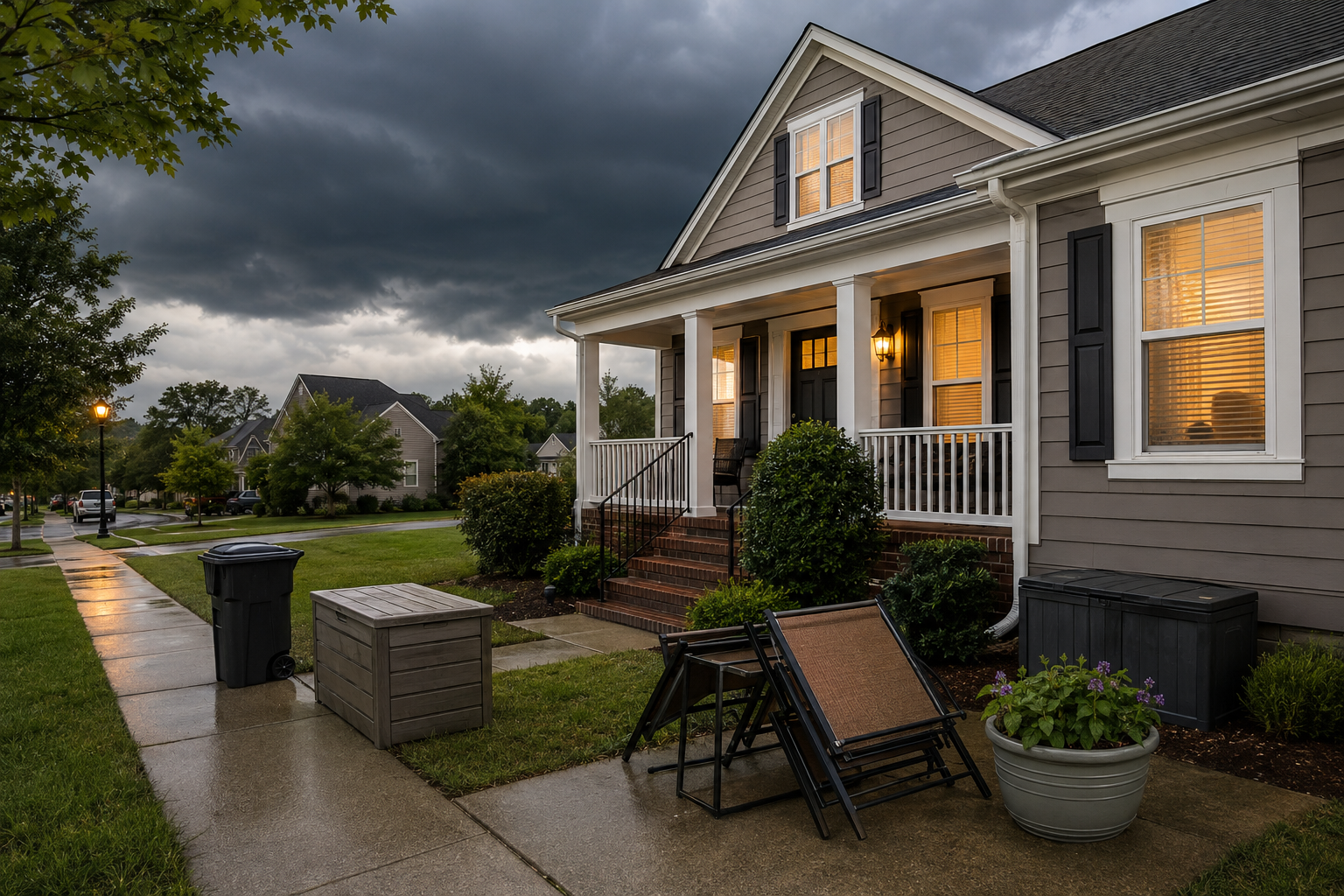
Storms put rental properties under stress quickly. In Richmond Metro, heavy rain, wind, falling limbs, and power outages can expose drainage, roofing, moisture, and system weaknesses that were manageable under normal conditions. The most useful preparation starts with two questions: where will water go, and what stops working if electricity is lost?
PMI James River treats storm preparation as part of a broader Richmond rental maintenance system. The same approach runs through proactive property maintenance: identify the failure path while the owner still has time to choose the scope, vendor, and response.
Key Takeaways
- Storm readiness starts with the property's known failure points, especially roof drainage, grading, crawlspaces, basements, exterior penetrations, trees, and power-dependent equipment.
- Water intrusion is time-sensitive. The first priorities are to limit active damage, identify what changed, and begin drying wet materials promptly.
- A power outage needs to be classified before a maintenance response is dispatched: utility outage, property electrical problem, or failure of a system that depends on power.
- Residents need a short reporting plan that tells them what to report immediately and what details help management respond correctly.
- Post-storm property evaluations should be triggered by risk, history, or observed conditions rather than performed automatically after every storm.
In This Guide
- Map The Property's Storm Failure Points
- Before The Storm: Clear Water Paths First
- Plan For What Stops Working When The Power Goes Out
- Give Residents A Short Reporting Plan
- After The Storm: Stabilize, Dry, And Document
- Use Triggered Property Evaluations Instead Of Automatic Entry
- Build A Storm Operating System
Map The Property's Storm Failure Points
A useful storm plan is property-specific. A Richmond City home with a basement, mature trees, and several roof transitions may have a very different failure path from a newer Chesterfield house with simpler roof geometry but a rear yard that holds water. A Hanover crawlspace home may show moisture below the living area before anything is visible upstairs. In Henrico, prior work orders and drainage history may tell an owner more than the ZIP code.
Start with a short failure map. Where has water appeared before? Which gutters or roof valleys collect debris? Where do downspouts discharge? Does water pond after heavy rain? Is there a sump pump, condensate pump, well pump, sewage ejector, or other device that depends on electricity? Are large limbs close to the roof or service line? Does a crawlspace, basement, attic, window, or exterior door have a moisture history?
Across Richmond Metro, lot layout, housing design, drainage history, tree cover, and surrounding stormwater infrastructure can change how the same storm affects two rentals. That makes the property's own history more useful than a generic checklist. Public drainage systems do not control what happens at a clogged gutter, short downspout, low foundation edge, or known seepage point on the individual lot.
The year-round Richmond rental maintenance map handles recurring seasonal timing. Storm readiness is the event overlay for heavy spring rain, summer thunderstorms, tropical remnants, fall leaf load, winter wind, and ice.
Before The Storm: Clear Water Paths First
Water diversion is usually the highest-leverage place to start. Storm damage often expands through a chain: debris blocks a valley, the gutter overflows, water drops beside the foundation, poor grading or a blocked drain keeps it there, and the first visible interior stain appears several steps away from the original problem.
Before a significant rain or wind event, focus on the parts of the property that control where water goes:
- Clear accessible gutters, roof valleys, downspout outlets, and yard drains when debris is restricting flow.
- Confirm downspouts discharge away from vulnerable foundation areas rather than directly against the structure.
- Look for standing-water patterns, erosion channels, displaced extensions, and debris that changes normal drainage.
- Review known roof, flashing, window, door, crawlspace, basement, and exterior-penetration trouble spots.
- Secure or remove loose exterior items that could become impact hazards in high winds.
- Use prior work orders and photos to identify repeat locations instead of treating every storm as a new problem.
The U.S. Environmental Protection Agency's current moisture-control guidance reinforces the same basic controls: maintain roof gutters, keep ground sloping away from the foundation, keep drainage lines unobstructed, and act quickly when water gets inside. The complete Richmond rental maintenance checklist is the better place for recurring execution details. The storm plan should stay focused on the failure paths most likely to matter when weather compresses the timeline.
For current regional hazards, watches, warnings, and preparedness information, use the National Weather Service Wakefield preparedness page. Its resources cover severe thunderstorms, flooding, hurricanes and tropical weather, winter weather, and other hazards that can affect Central Virginia.
Plan For What Stops Working When The Power Goes Out
A power outage is not automatically a maintenance failure at the rental. First determine whether the utility is reporting an area outage. If the utility is not showing a broader outage, basic property checks such as the main breaker may help distinguish a utility problem from an issue at the home.
For Dominion-served properties, the current Virginia outage and emergency page provides outage reporting, status information, and the outage map. Dominion instructs people to stay at least 30 feet away from downed power lines and report them immediately.
The next question is what the property loses when electricity stops. A routine utility outage can become a property-damage problem if a sump pump, sewage ejector, well pump, powered drainage system, or another critical component has no workable contingency. The risk is configuration-specific. A house with gravity drainage and public water behaves differently from one where a single powered pump prevents water accumulation.
HVAC belongs in the same dependency conversation. Storms do not cause every heating or cooling failure, but peak weather can expose a weak system at the same time vendor capacity is tight. Owners can reduce that overlap by handling peak-season HVAC failure prevention before severe weather turns a manageable repair into a scheduling problem.
Give Residents A Short Reporting Plan
Residents do not need the owner's maintenance playbook. They need clear instructions they can use under pressure.
At PMI James River, the storm-reporting priorities are simple: report new or active water intrusion promptly, secure loose personal outdoor items when it is safe to do so, check utility outage information before treating a neighborhood power loss as a property failure, and know where the electrical panel and main water shutoff are before an emergency. This gives the manager better information without shifting repair responsibility to the resident.
The paired Storm Readiness for Richmond Renters guide gives residents the before, during, and after instructions without mixing the resident audience into the owner's asset-management plan.
For water reports, ask for information that changes the response: where the water is appearing, whether it is entering now, whether the source appears related to rain or plumbing, which room or exterior area is affected, and whether photos or a short video can show the condition. For an outage, ask whether the utility is reporting an area event and whether the home has any property-specific failure after service is restored. Better reports shorten the path to the right response.
After The Storm: Stabilize, Dry, And Document
After severe weather, separate active damage from conditions that can be evaluated on a normal schedule. Active water entry, a structural opening, a serious electrical concern, sewage, a fallen tree affecting the structure, or another condition creating immediate safety or property-integrity risk needs stabilization first. A new stain with no active entry still matters, but it may follow a different response path.
Key point: Water damage has a drying timeline. EPA guidance says wet or damp materials should generally be dried within 24 to 48 hours after a leak or spill to reduce the chance of mold growth. Stabilizing the source is only the first part of the response.
Once active entry is controlled, document what changed and start the drying or remediation process appropriate to the condition. Photograph new stains, missing shingles, damaged siding, fallen limbs, displaced downspouts, standing water, debris at drains, damaged fencing, and any other new condition that may matter later. Record when the resident first noticed it and whether it appeared during a specific rain period.
Virginia's current landlord-maintenance baseline also applies. Virginia Code § 55.1-1220 requires landlords to make repairs needed to keep rental premises fit and habitable, maintain supplied electrical, plumbing, sanitary, heating, ventilation, air-conditioning, and other facilities in good and safe working order, and maintain the premises to prevent moisture accumulation and mold growth. Severe weather does not suspend those duties.
The timeline becomes especially important when moisture later affects flooring or finishes. Our guide to moisture and flooring timeline evidence explains why cause, notice, response, and progression should remain separate in the record.
Use Triggered Property Evaluations Instead Of Automatic Entry
Not every storm justifies entering every occupied rental. A triggered approach ties the decision to actual property risk rather than the weather event alone.
A post-storm property evaluation becomes more useful when one or more of these conditions are present:
- The property has a history of roof leakage, basement seepage, crawlspace moisture, drainage failure, or tree damage.
- The resident reports new staining, water, unusual odor, exterior damage, loss of a property-specific system, or another changed condition.
- The storm directly tested a known vulnerability at that property.
- Exterior observation shows damage or drainage behavior that justifies closer review.
- The owner or manager needs documentation before another rain event changes the evidence.
This is the same risk-based logic behind rental property evaluation frequency and triggers. Scheduled evaluations create a baseline. Triggered evaluations answer a different question: did this event expose a condition that should be documented, dried, stabilized, or corrected now?
Build A Storm Operating System
A strong storm plan is a repeatable sequence:
- Know the property. Map repeat water paths, power-dependent systems, tree exposure, drainage behavior, and prior storm history.
- Prepare before the event. Clear the water path, secure obvious exterior hazards, confirm utility and resident communication channels, and resolve known system problems while scheduling is still normal.
- Classify reports quickly. Separate utility outages from property failures, active damage from stable observations, and emergency stabilization from normal follow-up.
- Dry and document. Once the source is controlled, address wet materials on the appropriate timeline and preserve photos, timestamps, resident reports, vendor findings, authorizations, and closeout notes.
- Feed the lesson back into the property record. A downspout that repeatedly overflows, a crawlspace that repeatedly takes on water, or a pump that repeatedly creates risk during outages is no longer a surprise. It becomes a maintenance decision.
This is where storm readiness supports long-term ownership. A known failure path can often be corrected or planned for on a normal schedule. That gives the owner more control over vendor selection, repair scope, timing, documentation, and cost than waiting for the next storm to force the decision.
Storm Readiness FAQ
What Should Richmond Rental Owners Prioritize Before Heavy Rain?
Start with water movement. Clear restricted gutters, valleys, downspouts, and drains; confirm discharge away from vulnerable foundation areas; review known roof and moisture trouble spots; and make sure prior drainage problems have not returned. A property with a history of seepage, ponding, or sump dependence deserves more attention than one with no known water path.
Should A Rental Property Be Evaluated After Every Severe Storm?
No. Use a trigger-based approach. Resident reports, known property vulnerabilities, visible exterior damage, significant local impact, or a need to preserve evidence before the next rain event are stronger reasons for evaluation than the fact that a storm occurred.
Is A Power Outage A Landlord Maintenance Issue?
Not automatically. First check whether the utility is reporting an area outage. If service has been restored around the property but the rental still has no power, or if a property-specific system fails after power returns, property-level troubleshooting or service may be needed.
What Should Residents Report Immediately After A Storm?
New or active water intrusion, serious electrical concerns, structural openings, fallen trees affecting the home, sewage, major exterior damage, or another condition creating immediate safety or property-damage risk. New staining or moisture should also be reported promptly even when active entry has stopped, because the timing helps guide drying, diagnosis, and documentation.
What Is The Most Important Storm Record To Keep?
A clear before-and-after timeline. The useful record shows what was known before the storm, what changed during or immediately after it, when the resident reported the condition, what was observed, what was authorized, what was repaired or dried, and how the issue was closed.
Conclusion
Storm readiness works best when the owner and property manager already know the likely failure paths before severe weather arrives. For Richmond rentals, that means understanding how the property moves water, which systems depend on electricity, what residents should report, and what evidence will matter if conditions change.
The practical benefit is control. When the water path is known, reporting expectations are clear, and the response sequence is already defined, more storm-related problems can be stabilized quickly and converted into deliberate maintenance decisions instead of recurring surprises.
Next Step
If storm preparation, drainage history, resident reporting, and post-event follow-up are being handled differently every time, PMI James River can build those decisions into a consistent Richmond rental maintenance process so the property record, vendor response, and next maintenance decision stay connected.
Published: December 24, 2025
Updated: August 21, 2026