
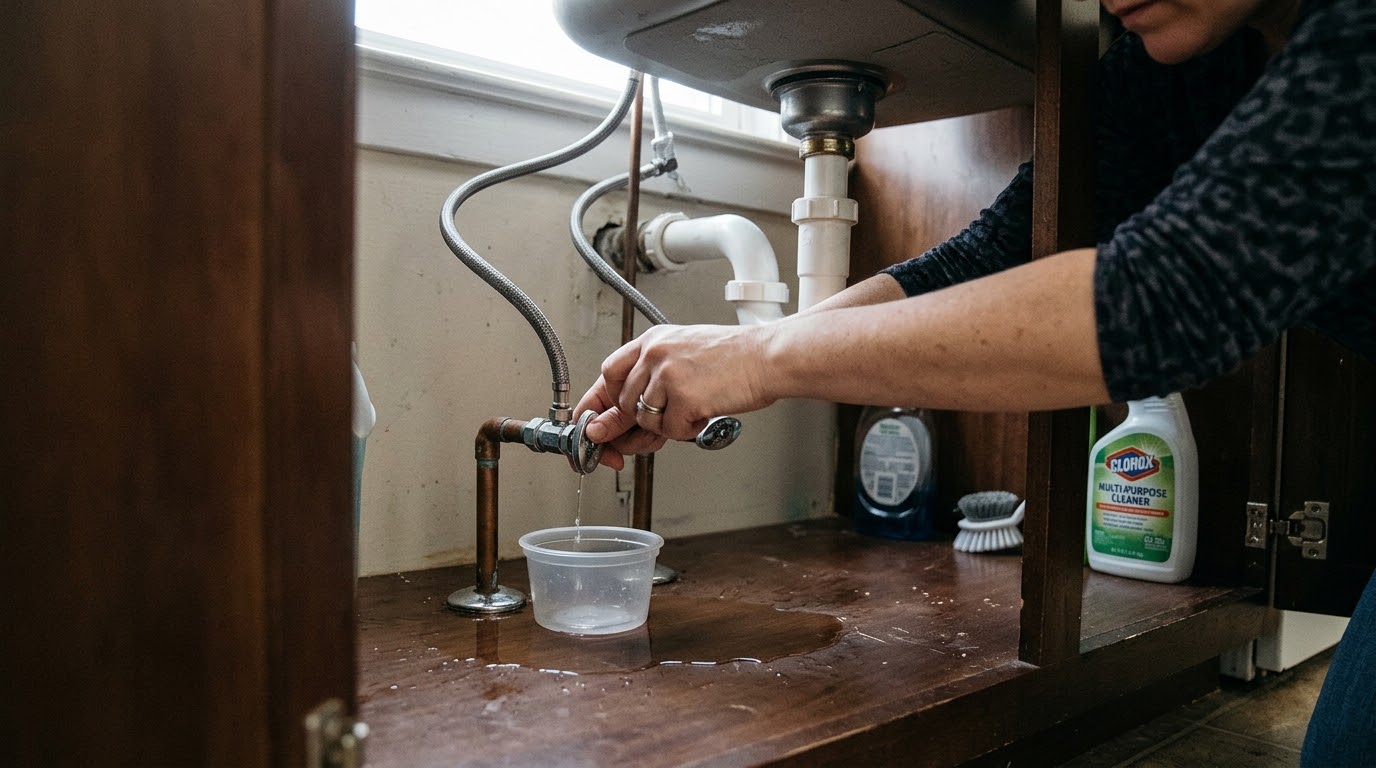
Most maintenance problems are easier to handle when you start with what you can actually observe. You do not need to determine what failed, what trade is involved, or what repair may be needed.
For ordinary maintenance problems, start with the PMI James River Resident Maintenance page or the resident troubleshooting library. This guide covers a smaller group of observations that should be brought to our attention promptly rather than waiting through a normal troubleshooting cycle.
Richmond-area rentals range from older city homes to newer suburban properties, and the same visible symptom can have very different causes. Tell us what you see, hear, smell, or experience. PMI James River will determine the appropriate next step.
Key Takeaways
- Tell us promptly when water is entering the home, an active leak continues, or a new or enlarging water stain appears.
- Report a ceiling that begins sagging or bulging, material that begins falling, or a stair, railing, deck, porch, or similar component that suddenly becomes loose or moves during normal use.
- For smoke, suspected gas, a sounding carbon monoxide alarm, sparking, a burning electrical odor, sewage entering the living area, or a home that cannot be secured, follow the appropriate emergency instructions rather than ordinary troubleshooting.
- A problem that is not listed here is not automatically something to ignore. Use the problem-specific troubleshooting guide for ordinary maintenance issues.
Tell Us About Water Where It Should Not Be
Please report water entering through a ceiling, wall, floor, window, door, or other part of the home. Also tell us about an active plumbing leak, an area that repeatedly becomes wet, or a new water-related stain that is getting larger.
If a normal, accessible shutoff safely stops a plumbing leak, use it to stop the water. The underlying problem should still be reported. Do not open walls or ceilings, remove plumbing components, or take equipment apart to look for the source.
If water is reaching a light fixture, outlet, electrical equipment, or another condition covered by our emergency procedures, stop ordinary troubleshooting and use the PMI James River Rental Emergency guide.
Tell Us When Something Begins Sagging, Bulging, Falling, or Moving
You are not expected to determine whether a building condition is structural. Report the observation instead.
Examples include a ceiling that begins sagging or bulging, material beginning to fall from a ceiling or wall, or a stair, railing, deck, porch, or similar part of the home that suddenly becomes loose or moves during normal use.
Do not test the condition by pulling on it, adding weight, climbing on it, or trying to brace or repair it. Send photos from a normal, accessible location when they can be taken without putting yourself in the affected area.
Use the Emergency Instructions for Certain Conditions
Some conditions already have a separate response path. If you see smoke or flames, smell suspected gas, hear a carbon monoxide alarm sounding its warning pattern, see sparking, smell a burning electrical odor, have sewage entering the living area, or cannot secure the home after damage or a break-in, use the applicable emergency instructions.
The emergency guide explains what to do first. Do not spend time trying to determine the cause before following those instructions.
For Other Maintenance Problems, Start With the Specific Guide
This article is intentionally not a complete list of everything that may need maintenance.
No heat, an air conditioner that is not cooling, an appliance problem, a slow drain, pest activity, a door problem, an alarm issue, or another household maintenance problem may still need attention. Those topics have different safe first steps and different reporting points.
Use the troubleshooting library to find the guide for the symptom you are experiencing. Follow the reasonable resident checks in that guide. If the problem continues, returns, or the guide tells you to stop and report it, submit a maintenance request.
Do not use the absence of a problem from this article as a reason to ignore it. The issue-specific guide is the better source for ordinary maintenance questions.
What Should You Include in a Maintenance Request?
Good information usually matters more than a diagnosis. Include:
- where the problem is located;
- what you actually saw, heard, smelled, or experienced;
- when you first noticed it;
- whether it is happening now, comes and goes, or has happened more than once;
- any normal, safe troubleshooting or containment step you already completed; and
- clear photos or a short video when they can be taken safely.
You do not need to open walls, remove equipment panels, enter a crawlspace or attic, or test a questionable component just to provide more information.
PMI James River will review the information and determine the appropriate maintenance path. Our Emergency vs. Urgent vs. Routine Maintenance guide explains how reported problems are classified.
For a non-emergency maintenance request, submit the issue through the Rentvine Resident Portal.
Published: September 25, 2026