
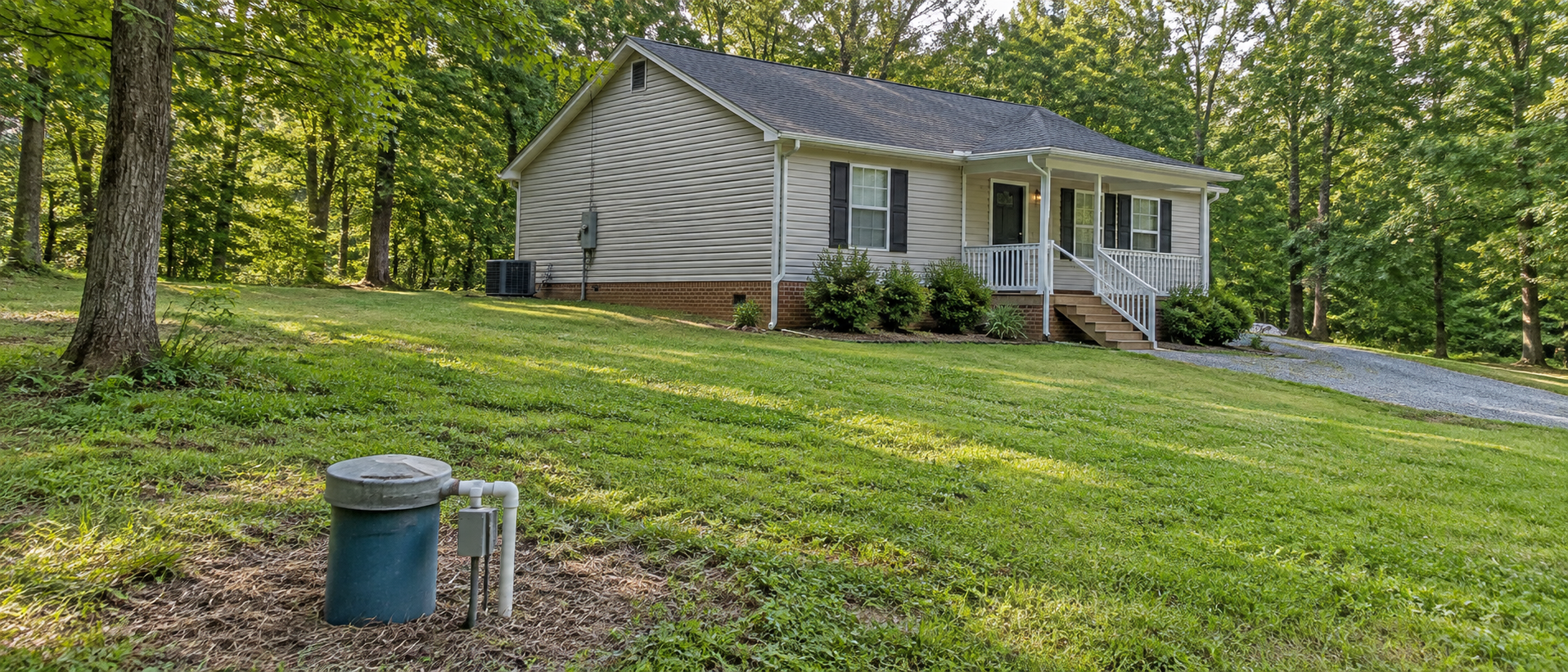
If a Hanover County rental is already under consideration, the investment decision should move from broad market selection to the specific property's operating and site conditions. PMI James River's Richmond real estate investment services help investors test rent potential, ownership costs, property condition, and the assumptions that can change a purchase after closing.
This article is the Hanover companion to our Richmond rental acquisition framework. It does not rank Mechanicsville, Ashland, or other parts of Hanover County. It assumes a particular property and price are already on the table and asks whether the rent, taxes, utility system, site constraints, permits, condition, and capital needs support the deal.
Key Takeaways
- Use a property-specific rent range before allowing the purchase price or mortgage payment to influence the income assumption.
- Hanover County's current real estate tax rate is $0.81 per $100 of assessed value.
- Public water and sewer versus private well and septic is a major underwriting fork because it changes inspection scope, recurring responsibilities, and future capital exposure.
- Check parcel, land-use, permit, inspection, drainage, floodplain, Chesapeake Bay, easement, well, and septic information when those conditions apply to the property.
- Hanover currently has preliminary FEMA flood maps in addition to the existing maps. Preliminary mapping is forward-looking risk information, not a substitute for the current effective map.
Start With the Rent the Property Can Actually Earn
Purchase price and rent should be tested independently. Build the rent range from the homes a prospective resident could realistically choose instead, then adjust for the subject property's condition, layout, bedroom and bathroom count, parking, storage, outdoor space, pet policy, utility arrangement, and current competition.
Automated rent estimates and countywide averages can help with initial screening, but PMI James River does not treat them as a final rent recommendation. A Hanover property on public utilities can operate differently from a superficially similar home with a private well and septic system, and a larger lot or rural setting does not automatically translate into a predictable rent premium. Our guide to pricing a Richmond rental in the current market explains why property-level competition should drive the supportable range.
For an occupied property, review the lease, concessions, deposit records, payment history, utility responsibilities, and documented condition. The current contract rent is one input. The acquisition model should also ask what the property is likely to support when the current tenancy eventually turns over.
Build the Hanover Operating Model From the Actual Systems
Once the rent range is credible, model recurring costs separately from financing and known capital work. Typical lines can include real estate taxes, insurance, management, vacancy, turnover, routine maintenance, owner-paid utilities or services, association obligations when applicable, private-system maintenance, and reserves for larger repairs or replacements.
The Richmond rental property budgeting guide goes deeper on separating recurring operating costs, reserves, vacancy, turnover, debt service, and known capital work. Hanover makes that discipline especially important when a private well, septic system, long driveway, drainage feature, or larger site creates property-specific ownership costs that a generic expense ratio may not capture.
Use the Actual Hanover Tax Record
Hanover County's current real estate tax rate is $0.81 per $100 of assessed value. Use the current parcel assessment and tax record rather than assuming the purchase price is the assessed value. Hanover maintains the current rate on its tax rates page.
Decide Early Whether the Property Is Public-Utility or Private-System
In Hanover, utility configuration is not a small property-description detail. Some properties are served by public water and sewer, while others rely on private wells, private septic systems, or a mix of public and private service. If public service is not already available at the property, extending public water or sewer can require engineering, easements, permits, construction, fees, and owner expense. The County's water and sewer extension guidance shows why service availability should be verified before the buyer assumes conversion is simple or inexpensive.
For a property with private septic, verify the system type, location, service history, condition, and any applicable Chesapeake Bay Preservation Area requirements. Hanover states that septic systems within a Chesapeake Bay Preservation Area are subject to a five-year pump-out or qualifying inspection requirement. Use the County's septic pump-out guidance and obtain property-specific records where available.
Use Hanover's Parcel and Site Records to Test the Deal
Local public records can identify questions that should be resolved before closing. They do not replace a professional inspection, title review, survey, well or septic inspection, insurance quote, or specialist evaluation.
| Check | Why It Matters to the Deal | Hanover Source |
|---|---|---|
| Parcel, permits, projects, and inspections | Use the property record to investigate land use, building information, inspections, and permits or projects tied to the address before treating visible work as fully documented. | Hanover eTRAKiT Property Search |
| Current zoning and land-use plan | Check the parcel's current zoning and compare the proposed use with Hanover's General Land Use Plan rather than assuming a broad county designation answers the property-level question. | Hanover Zoning Process |
| Flood mapping | Review the current flood map for today's requirements and the preliminary FEMA map for possible future changes in mapped risk. Do not treat preliminary mapping as the current effective rating map. | Hanover Preliminary FEMA Floodplain Mapping |
| Drainage and Chesapeake Bay constraints | Site work near wetlands, streams, natural drainage areas, floodplain, or Chesapeake Bay preservation areas can change the feasibility and cost of additions, grading, clearing, or other improvements. | Hanover Land Disturbance and Drainage |
Put Private-System and Site Risk Into the Capital Plan
A Hanover property can look straightforward inside the house while still carrying material site-level questions. A private septic system, well, drainage pattern, long utility run, easement, floodplain condition, or Chesapeake Bay constraint can affect inspection scope, renovation flexibility, and future capital needs.
The Richmond rental due-diligence guide provides the broader fixer-versus-money-pit framework. The practical rule is the same here: a known, credibly priced repair can be underwritten. An unresolved system or site condition should remain an uncertainty until the buyer has enough evidence to define the likely scope.
Stress-Test the Hanover Deal
Re-run the acquisition model with a few less convenient assumptions before deciding the price is justified:
- rent below the initial target;
- one additional month of vacancy or a slower first lease-up;
- a higher insurance quote or flood-related insurance requirement;
- well or septic work beyond routine service;
- drainage, site, or utility work that costs more than the first estimate; and
- more cash required at closing because reserves, lender requirements, or immediate repairs change.
Then compare the result with the owner's actual investment objective. A property bought for current income and a property bought primarily for long-term wealth creation can reasonably have different return profiles. Our cash flow versus rental wealth guide explains why the acquisition should be measured against the job the owner needs it to do.
Keep the Where-to-Buy Decision Separate
This page does not rank Mechanicsville, Ashland, rural Hanover, or other parts of the county. It also does not assume a larger lot, lower tax rate, or suburban location automatically creates a stronger rental. Those are market-selection questions.
Once a specific Hanover property has been identified, the job becomes narrower: verify the supportable rent, tax bill, utility configuration, well or septic condition, current zoning, land-use context, permits, inspection history, flood and drainage exposure, physical condition, financing, and total cash required at the proposed price. The property still has to work on its own facts.
Frequently Asked Questions
What is Hanover County's current real estate tax rate?
The current rate is $0.81 per $100 of assessed value. Use the subject property's current assessment and tax record when building the operating model.
Should a buyer prefer public water and sewer over a private well and septic?
Not automatically. Each configuration has different operating and capital considerations. The acquisition model should reflect the actual system, its condition, service history, inspection findings, and likely future costs rather than treating one configuration as universally better.
Which Hanover flood map should I use?
Use the current effective map for present regulatory and insurance questions, then review Hanover's preliminary FEMA mapping for forward-looking risk context. The preliminary map should not be treated as though it is already the effective map.
Next Step: Test the Rent Before You Commit to the Deal
For a Hanover County property already under consideration, PMI James River can prepare a free property-specific rental analysis to help establish a supportable rent range. Then test that rent against the property's tax bill, utility systems, site conditions, repairs, local records, financing, and required cash.
Published: October 2, 2026