
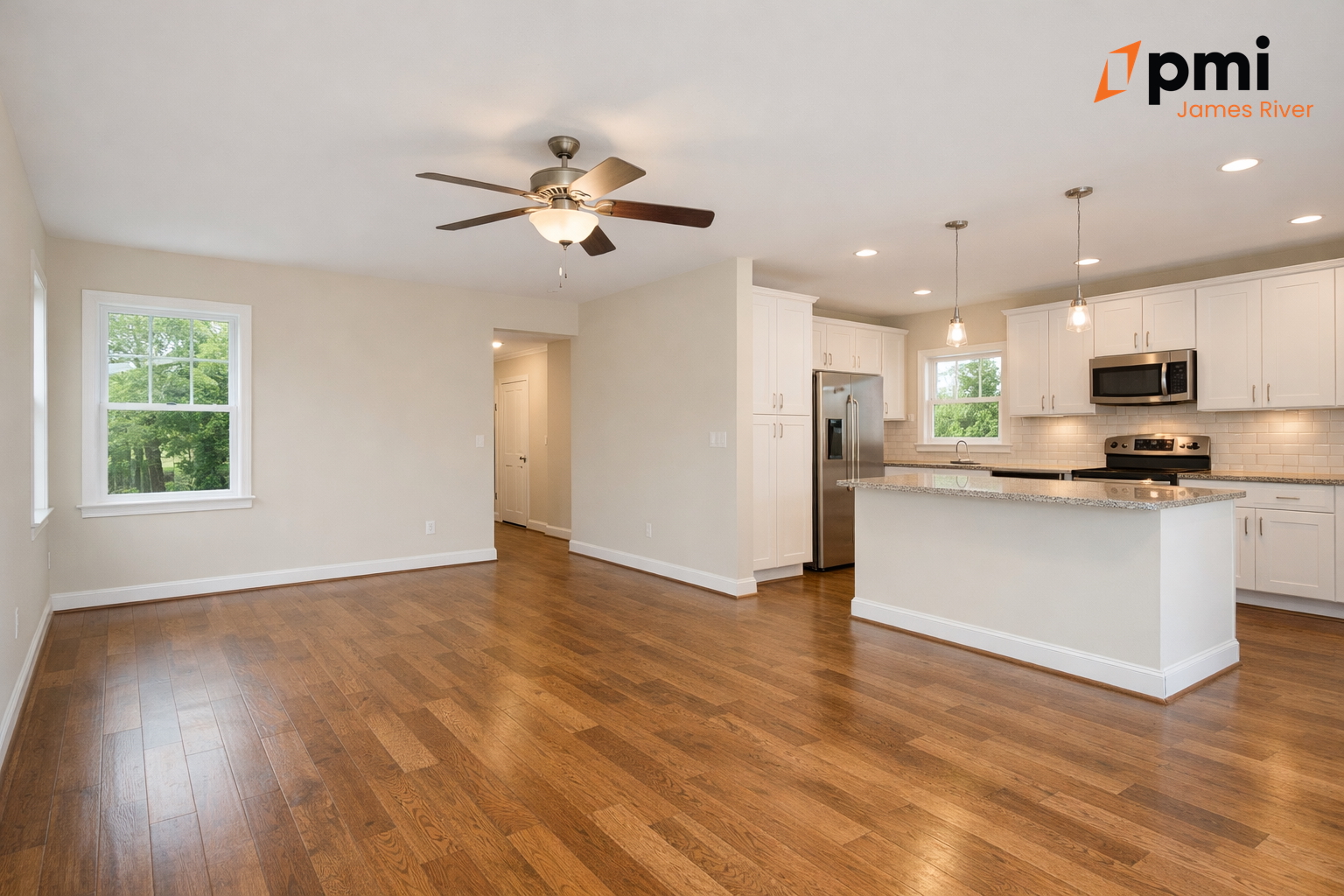
PMI James River's rent-ready standards define the finished condition a Richmond rental should reach before the resident takes possession. During turnover, we first focus on the condition required for effective rental marketing, then complete the remaining applicable work before move-in.
Finished does not mean new or luxurious. It means complete, consistent, safe, reliable, and ready for normal use. The broader Richmond rent-ready baseline explains why the standard matters and how work can be sequenced through the vacancy period. This page defines the condition PMI James River looks for in practice.
The three tiers below explain why an item matters. Tier 1 covers legal, safety, habitability, security, and required-function issues. Tier 2 covers PMI James River operating standards. Tier 3 covers optional asset-protection and proactive-maintenance measures. Market-ready versus rent-ready is a separate timing decision that explains when the work needs to be completed. Legal deadlines, safety conditions, active property damage, and issues that materially affect marketing can move work earlier.
Other applicable Tier 2 work can often be completed after lease signing but before possession.
Key Takeaways
- Tier 1 covers legal duties, habitability, safety, security, and the reliable operation of supplied systems and appliances.
- Tier 2 covers PMI James River's operating standards for cleaning, presentation, access, flooring, finishes, property protection, and a defensible move-in baseline.
- Tier 3 covers optional asset-protection and proactive-maintenance measures selected according to the property's history, construction, and economics.
- These standards describe expected condition when an issue is known or reasonably observable. They do not mean every concealed component receives a separate diagnostic inspection at every turnover.
- An item's tier describes why it matters. Its actual condition determines when it needs to be corrected.
In This Guide
- The Rent-Ready Baseline
- How PMI James River Evaluates Rent-Ready Condition
- Tier 1: Must-Do Standards
- Tier 2: PMI James River Business Standards
- Tier 3: Optional Asset-Protection Measures
- Documentation That Protects the Baseline
The Rent-Ready Baseline
A finished rental should feel complete from the first showing through move-in. During the first 60 seconds of a rental showing, prospects are already reading the entry, odor, light, cleanliness, floors, hardware, and other early touchpoints for signs that the turnover is complete.
That is why many Tier 2 presentation items are market-ready work even though the full rent-ready baseline is not due until possession. By move-in, the home should be professionally clean, paint and repairs should look intentional, floors and transitions should be safe and serviceable, doors and windows should operate as expected, supplied systems and appliances should function, and unresolved vendor work, abandoned belongings, active leaks, and other obvious problems should be gone.
That finished condition is the move-in baseline. It gives the condition record a clear reference point and reduces the number of unresolved questions carried into the lease.
Market-ready is the earlier leasing milestone. Rent-ready is the final condition before possession. The two overlap heavily. Professional cleaning, strong presentation, reliable showing access, and obvious defects that affect photographs or showings belong before marketing. Other details may matter greatly during the tenancy without influencing a prospect's decision and can be completed later in the same vacant turnover.
How PMI James River Evaluates Rent-Ready Condition
PMI James River treats rent-ready work as a partnership. The owner decides whether to coordinate approved work directly or authorize PMI James River to coordinate it. We evaluate the property, identify known or reasonably observable gaps, explain which tier applies, and coordinate or review the work needed to reach the applicable baseline.
- Tier 1: Items affecting legal duties, health, safety, security, habitability, or the reliable operation of supplied systems and appliances.
- Tier 2: PMI James River standards used to market and manage the home consistently, reduce predictable repair friction, protect common damage points, and document a clear move-in condition.
- Tier 3: Optional asset-protection and proactive-maintenance measures intended to reduce recurring repair risks or protect long-term value.
How to Read These Standards
These are condition standards, not a promise that PMI James River performs a destructive, specialist, or component-by-component diagnostic inspection at every turnover. Normal turnover provides broad access to the property, but it does not mean every weatherstrip, concealed connection, fastener, appliance bracket, duct, seal, or hidden building component is independently tested.
We act on conditions that are known, reported, visible, reasonably observable during normal turnover activity, or identified by a vendor or other qualified professional. When the property's history or an observed condition suggests a deeper problem, specialist evaluation may be appropriate.
When a problem is identified, its tier helps explain why it matters and its actual condition helps determine when it must be corrected.
An item may need completion before marketing because it affects safe access, photographs, showings, accurate representation, or active property damage. Another item in the same tier may reasonably be completed after lease signing but before possession. A signed lease provides a practical second work point because the property remains vacant and rental income is now approaching.
The property does not need every optional improvement. It does need applicable Tier 1 work on the timeline required by the law and actual condition, and it needs the Tier 2 work necessary to reach PMI James River's finished move-in standard before possession.
The scope also changes with the property. Older Richmond City homes may need more attention to layered paint, windows, ventilation, moisture pathways, and door alignment. Homes in Henrico and Chesterfield may add larger yards, attached garages, exterior-access spaces, and drainage areas. Property-specific systems can add other considerations. The work list changes, not the finished standard.
Better Given, Better Back
The finished move-in standard establishes a clearer starting point for the cleanliness and care expected at move-out, ordinary wear and tear excepted.
A home delivered clean, complete, and well documented gives PMI James River a stronger basis for comparing later condition. The distinction between normal use and chargeable damage is addressed more fully in our guide to ordinary wear and tear versus damage.
Tier 1: Must-Do Standards
Tier 1 begins with the landlord's duty to provide and maintain a fit premises. Virginia Code § 55.1-1220 requires compliance with applicable building and housing codes materially affecting health and safety, a fit and habitable condition, and good and safe working order for supplied electrical, plumbing, sanitary, heating, ventilation, air-conditioning, facilities, and appliances.
- Utilities remain active through turnover so electrical, plumbing, HVAC, appliances, sump pumps, and other supplied systems can be operated and reasonably observable problems identified.
- Supplied systems and appliances operate safely and as designed. Known failures are repaired rather than left for the incoming resident to discover.
- Known or reasonably observable problems with property-specific supplied systems are addressed as applicable. Depending on the home, that may include well equipment, water-treatment equipment, sump pumps, fireplaces, irrigation controls, generators, garage-door systems, or septic-related equipment.
- Active leaks, visible moisture problems, unresolved mold conditions, exposed electrical hazards, sewage issues, and other known conditions materially affecting health or safety are addressed.
- Steps, decks, handrails, guardrails, landings, and walking surfaces are stable and free of known hazards. Conditions affecting safe showing access are corrected before showings begin.
- Exterior doors close, latch, and secure properly. Ground-level and other required locking windows operate and lock.
- Glazing is maintained free from cracks and holes where required.
- Where applicable code requires insect screens, they are present, securely fitted, and functional. This does not mean every window or exterior door requires a screen.
- Required address identification is present, legible, and visible from the street or road.
- Active infestation or meaningful pest activity identified during turnover is addressed rather than carried into showings or the tenancy.
- Required emergency escape and rescue openings remain operational from the inside without keys or tools as required by applicable code.
- Known or reasonably observable damaged or nonfunctioning receptacles, switches, supplied fixtures, cover plates, and protective devices are corrected. Existing GFCI or similar protective devices known not to operate properly are repaired or replaced as appropriate.
- Where an automatic garage door and opener are supplied, the door, opener, wall control, safety sensors or reverse function, and provided remotes operate as designed before possession.
- Heavy supplied appliances are stable and installed as designed. Freestanding ranges and any refrigerator, washer, dryer, stacked appliance, or other heavy unit calling for anti-tip, anchoring, leveling, restraining, or stacking hardware uses the applicable manufacturer-required hardware.
- Smoke alarms are present and operational. Virginia law also requires the landlord to provide a certificate stating that all smoke alarms are present, inspected, and in good working order no more than once every 12 months.
- Carbon monoxide alarms are installed when required by applicable law, code, or management policy.
Virginia Maintenance Code provisions address building-condition requirements including premises identification, insect screens, structural maintenance, and related property standards. The exact requirement depends on the actual property and condition.
Fire Extinguishers
Virginia does not require the same portable-fire-extinguisher setup in every existing rental. For covered one- and two-family homes and townhouses, a kitchen extinguisher rated 2-A:10-B:C or approved equivalent became part of Virginia's residential code beginning with the 2009 code cycle, effective March 1, 2011, subject to the one-year transition and the qualifying sprinkler exception.
PMI James River uses that history as a practical screen. A clearly older home generally predates this residential requirement unless another property-specific rule applies. For homes around or after the transition, or whenever applicability is uncertain, we take the conservative approach and supply a compliant extinguisher rather than turn the issue into a permit-history research project.
Any extinguisher intentionally supplied or retained is treated as real safety equipment and included in the applicable inspection and maintenance process. Our Virginia rental fire-extinguisher guide covers the code history, required rating, multifamily distinction, and recurring inspection and maintenance requirements in detail.
Tier 2: PMI James River Business Standards
Tier 2 is not a luxury standard. It is the practical condition PMI James River uses to present the home accurately, reduce predictable early requests, control access, protect common damage points, and create a usable move-in record. These standards are intended to reduce avoidable vacancy friction, repeat service calls, preventable damage, and unnecessary future turnover work.
PMI James River works with the owner to accomplish Tier 2 within the approved turnover budget. We prioritize low-cost, high-impact corrections, use practical materials rather than luxury finishes, and explain the tradeoffs when several items compete for the same dollars. Some Tier 2 work belongs before marketing because it directly affects leasing. Other Tier 2 items remain Tier 2 but can be completed later in the vacant turnover period before possession.
Cleaning and Presentation
Cleaning belongs squarely in the market-ready scope. PMI James River wants the main professional cleaning completed before photographs and showings so the home presents at its best and the starting condition is clear. Depending on showing activity and time on market, a light refresh may be needed before move-in. A second full professional cleaning is not automatically necessary unless the condition warrants it.
The move-in condition also establishes the cleaning baseline used at move-out. Skipping professional cleaning at the beginning makes that standard harder to apply at the end of the tenancy.
- The home is professionally cleaned to a hotel-room level before marketing, including appliance interiors, range hoods, refrigerator drawers, cabinets, drawers, grout, fireplaces, vents, return registers, windowsills, trim, and other common turnover misses.
- Carpet is professionally cleaned by extraction before marketing when present, with dated documentation retained. Odor, heavy staining, and damaged areas are addressed separately.
- Trash, abandoned supplies, shower curtains, toiletries, decorations, stored owner items, and personal property are removed from the home, garage, shed, attic-access area, crawlspace-access area, and yard. Items visible to or accessible by prospects are removed before photographs and showings, and the full property is cleared before possession unless an item is specifically approved to remain.
- Smoke, pet, moisture, food, and other persistent odors are investigated and corrected at the source rather than covered with fragrance.
- Interior and exterior light bulbs work and use a reasonably consistent color temperature where practical. Prospect-facing lighting is handled before photographs and showings because failed or badly mismatched bulbs can make otherwise sound rooms present poorly.
- Doors, drawers, cabinets, switches, faucets, fans, and other frequent touchpoints are clean, complete, and presentable. Loose or crooked hardware, visible damage, unfinished repairs, improvised fixes, and other obvious defects that make the home feel unfinished are corrected.
- Before move-in, PMI James River checks whether showing activity or time on market has materially affected cleanliness. A light cleaning or touch-up is completed where needed so the resident receives the home at the same clean standard established for marketing.
Locks, Access, and Basic Risk Control
- Exterior-access doors use an approved lock system that provides reliable management access and rekey control. Attached garages, enclosed porches, sunrooms, and buffer spaces entered from outside are included in the access plan.
- Exterior locks are changed or rekeyed at each change of tenancy. Previous physical access is eliminated, and current keys, remotes, access devices, and codes are documented.
- One practical keying system is used where feasible. Owner-installed smart or electronic locks remain only when their ongoing use has been discussed and approved.
- Interior doors required for egress do not use keyed locks. Functioning privacy locks may remain where appropriate.
- Obvious failed door sweeps, exterior gaps, or deteriorated weatherstripping identified during normal turnover work are addressed where they create recurring pest, moisture, comfort, or property-protection problems.
- Thresholds, baseboards, floor transitions, and trim with an obvious loose or failed condition are secured so normal traffic does not create an early repair or trip issue.
- Owner-controlled smart-home and monitoring devices are reviewed before marketing and possession. Interior cameras and audio-recording devices are disabled or removed before marketing. Exterior cameras, video doorbells, alarms, smart locks, and similar connected devices are removed, reset, transferred, or specifically approved so inappropriate prior-owner access does not continue into the tenancy.
- Cleaning chemicals, pest-control products, fuel, landscaping chemicals, and owner equipment are removed unless PMI James River has specifically approved storage and control of the item.
Access used for photographs and showings needs to work reliably before marketing. Other Tier 2 access closeout that does not affect prospect access can be completed before possession.
Flooring and Transitions
- Flooring is clean, serviceable, and appropriate for normal residential use.
- Loose planks or tiles, rippled or torn carpet, exposed tack strip, failed stair nosing, loose thresholds, and damaged transitions are repaired according to the condition.
- Significant stains, permanent odor, or other visible damage that materially affects photographs or showings is addressed before marketing.
- Normal age and wear do not automatically require flooring replacement. The question is whether the surface remains safe, functional, reasonably presentable, and supportable as the starting condition for the new tenancy.
A flooring defect can change tiers. Worn but serviceable flooring is generally a Tier 2 presentation and baseline issue. A loose transition, exposed tack strip, unstable surface, or another known trip or safety hazard can require Tier 1 treatment.
Window Coverings and Property Protection
- Functional, intact blinds are installed where privacy is reasonably expected. Where blinds are not appropriate, an approved curtain rod or other durable covering system is provided.
- Sliding glass doors use durable vertical blinds.
- Owner draperies and inconsistent decorative coverings are removed before move-in.
- Door stops are installed where normal door swing would repeatedly damage drywall, trim, fixtures, or appliances.
- Sliding-door locks and handles operate without requiring an unnecessary separate key unless that lock is the primary approved access method.
- Clean HVAC filters are installed, and the filter size and location are documented for management.
Why Timing Matters: Door Stops
Door stops are a useful example because they show why tier and timing are separate decisions. PMI James River treats door stops as Tier 2 because they are a practical, low-cost way to prevent predictable property damage during the tenancy.
They are usually rent-ready rather than market-ready. A prospect rarely decides whether to lease a home based on its door stops, so installing them does not normally need to delay photographs, showings, or a lease. They can usually be installed after lease signing and before possession.
Paint and Finish Consistency
- Wall colors are neutral and broadly compatible with rental use.
- Touch-ups blend. When they do not, the affected wall is reset corner to corner rather than left with visible flashing or mismatched sheen.
- Holes, anchors, gouges, adhesive residue, stains, and failed patches are repaired cleanly rather than documented as the new normal.
- Trim, baseboards, doors, and frames are clean and free of obvious marks or unfinished repair work.
- Paint colors, brand, product line, and sheen are documented so future touch-ups can be matched.
Highly visible patchwork, mismatched sheen, or unfinished repairs that materially affect photographs or showings belong in market-ready preparation. Smaller finish corrections that do not affect lease-up can be completed later in the vacant turnover period before possession.
Work that disturbs painted surfaces in pre-1978 rental housing may fall under the federal Renovation, Repair and Painting Rule. EPA's landlord RRP guidance explains that landlords performing covered renovation work themselves need the applicable firm and renovator certification. When a landlord hires an outside renovation firm, the landlord does not need that certification, but the hired firm must be Lead-Safe Certified and use a certified renovator.
Plumbing and Moisture Control
- Toilets are stable, properly secured, and free of known seepage at the base. Seats are secure and functional.
- Known slow drains, deteriorated supply lines, leaking valves, and missing or inaccessible shutoffs are addressed according to the condition and urgency.
- Drain stoppers and strainers supplied with the property are present and functional.
- Caulk and grout joints with an obvious failed condition are repaired where needed to maintain a clean finished condition and control water entry.
- Bathroom and kitchen ventilation operates as designed when supplied.
Timing depends on the condition. A cosmetic caulk correction may fit into Tier 2 rent-ready closeout. An active leak, failing supply line, sewage condition, serious moisture problem, or another condition materially affecting health, safety, or the property moves into Tier 1 treatment and is addressed sooner.
Exterior and Site Condition
- The lawn is cut, edged, and presentable for the season.
- Planting beds are weeded and maintained enough that the property does not present as abandoned or mid-project.
- Walks, steps, stoops, porches, decks, and entries are clear of debris, heavy algae buildup, loose materials, and stored items.
- Garages and sheds are emptied of owner property unless approved, and floors are swept.
- Provided fences and gates with obvious defects are stable and functional. Latches and operators work as intended. A required safety barrier or another code-related condition moves into Tier 1 when applicable.
Exterior conditions that materially affect photographs, first impressions, or showing access are handled before marketing. Lower-impact cleanup can be completed later as long as the listing remains accurate and the condition is not allowing property damage to continue.
Tier 3: Optional Asset-Protection Measures
Tier 3 is where PMI James River separates the finished move-in baseline from optional preventive work. These measures are not required at every turnover. They are selected because the property's history, construction, ownership plan, or repair economics suggest that a modest investment now may prevent a larger problem later.
- Extend downspouts or add splash blocks where roof runoff repeatedly concentrates near foundations, entries, walks, or crawlspace vents.
- Clean, repair, or improve gutters and downspout discharge where the property has a history of overflow or poor roof-water control. If an observed drainage failure is already causing dampness, deterioration, or another required correction, it is no longer treated as merely optional.
- Seal exterior penetrations at hose bibs, utility entries, vents, and similar openings with appropriate exterior-grade materials where preventive sealing makes sense.
- Maintain tree and branch clearance where roof and gutter debris repeatedly contribute to overflow or accelerated exterior wear.
- Improve electrical-panel labeling where clearer circuit identification would make future maintenance or emergency work easier.
- Label the main water shutoff or improve practical access when an emergency shutoff would otherwise be difficult to locate.
- Install approved leak-detection devices in locations where a concealed leak could create substantial damage.
- Install removable, wipeable liner on kitchen and bathroom cabinet bottoms to protect cabinet surfaces from spills, staining, and routine wear, especially beneath sinks and in other spill-prone areas.
- Perform property-specific preventive service, such as dryer-exhaust maintenance, when the property's equipment, history, service interval, or condition makes the work worthwhile.
Tier 3 does not need to become an ever-growing checklist inside this article. The PMI James River proactive property maintenance approach explains how owners can select preventive work according to the actual property rather than treating every possible measure as a rent-ready requirement.
Documentation That Protects the Baseline
Rent-ready condition is only as useful as the record that supports it. PMI James River's turnover file should reflect the final condition the resident actually receives, not merely the condition captured for marketing photographs.
- Dated condition photographs and video showing each room, major surface, appliance, exterior area, and known exception.
- Cleaning and carpet-cleaning invoices or receipts when those services were performed.
- Paint brand, product, color, and sheen.
- HVAC filter sizes and locations.
- Keys, remotes, access devices, lock instructions, and approved codes.
- Model and serial information for supplied appliances when available.
- Operating information, reset information, warranty records, service contracts, and relevant service history for property-specific systems when available.
- Completed repair invoices, permits, warranties, and closeout notes for material work.
- A written list of any approved exception that remains rather than an informal promise that an item may be handled later.
Documentation does not turn every future condition issue into a resident charge. It gives the owner, resident, and manager a reliable starting point for applying the lease and Virginia law.
Frequently Asked Questions
Does PMI James River Inspect Every Item on This List at Every Turnover?
No. These standards describe the condition PMI James River expects when a condition is known or reasonably observable. A normal turnover evaluation is not a destructive or specialist inspection, and PMI James River does not independently dismantle or diagnostically test every concealed component, connection, seal, fastener, duct, or building system. Property history, owner information, resident reports, normal observation, vendor findings, and specialist evaluations all contribute to what becomes known.
Does Everything Have to Be Finished Before Marketing Begins?
No. PMI James River focuses first on market-ready condition. Professional cleaning, reliable showing access, accurate presentation, and conditions that materially affect photographs or showings belong before marketing. Legal requirements, safety issues, and active property damage follow the earlier timeline the actual condition requires. Other applicable Tier 2 work can often be completed after lease signing and before possession.
Is This a Renovation Checklist?
No. The standards define finished condition and reliable operation at move-in. Renovation choices sit above that baseline and should be evaluated through rent position, durability, replacement timing, and ownership goals.
Do the Same Standards Apply to Every Property?
The finished outcome is consistent, but the work needed to reach it varies. A newer home may need little more than cleaning, testing of normal supplied features, and documentation. An older Richmond home may require more work on paint consistency, windows, ventilation, drainage, and mechanical readiness. Property-specific systems also change the scope.
Is Tier 3 Required Before a Resident Moves In?
No. Tier 3 is optional asset-protection and proactive-maintenance work unless the actual condition changes the issue. For example, improving downspout discharge as a preventive measure may be Tier 3. An active drainage failure already causing deterioration may require correction regardless of the Tier 3 label.
Why Is Professional Cleaning Documentation Important?
It establishes what cleaning was completed before marketing and provides a clear starting condition for the tenancy. If showing activity later creates new dirt or dust, PMI James River can document and complete the light refresh needed before move-in rather than postponing the first professional clean.
Does PMI James River Require a Full Repaint at Every Turnover?
No. Existing paint can remain when it is clean, consistent, and presentable. A full wall or room reset is appropriate when touch-ups will not blend or the existing finish makes the home look unfinished.
Can an Owner Leave Supplies or Equipment for the Resident?
Not without approval. Uncontrolled chemicals, tools, fuel, landscaping equipment, and leftover project materials create storage, access, liability, and move-out problems. Items needed for an approved property system should be documented and stored in an agreed location.
Apply the Standard to the Actual Property
PMI James River applies these standards to the property's actual condition rather than using a one-size-fits-all renovation or inspection checklist. Initial turnover work focuses on reaching a genuine market-ready condition. Remaining applicable Tier 2 work is completed before possession, while Tier 3 choices can be evaluated according to the property's long-term needs.
Owners preparing a Richmond rental for its next tenancy can begin through the PMI James River contact page.
Published: December 18, 2025
Updated: August 26, 2026