
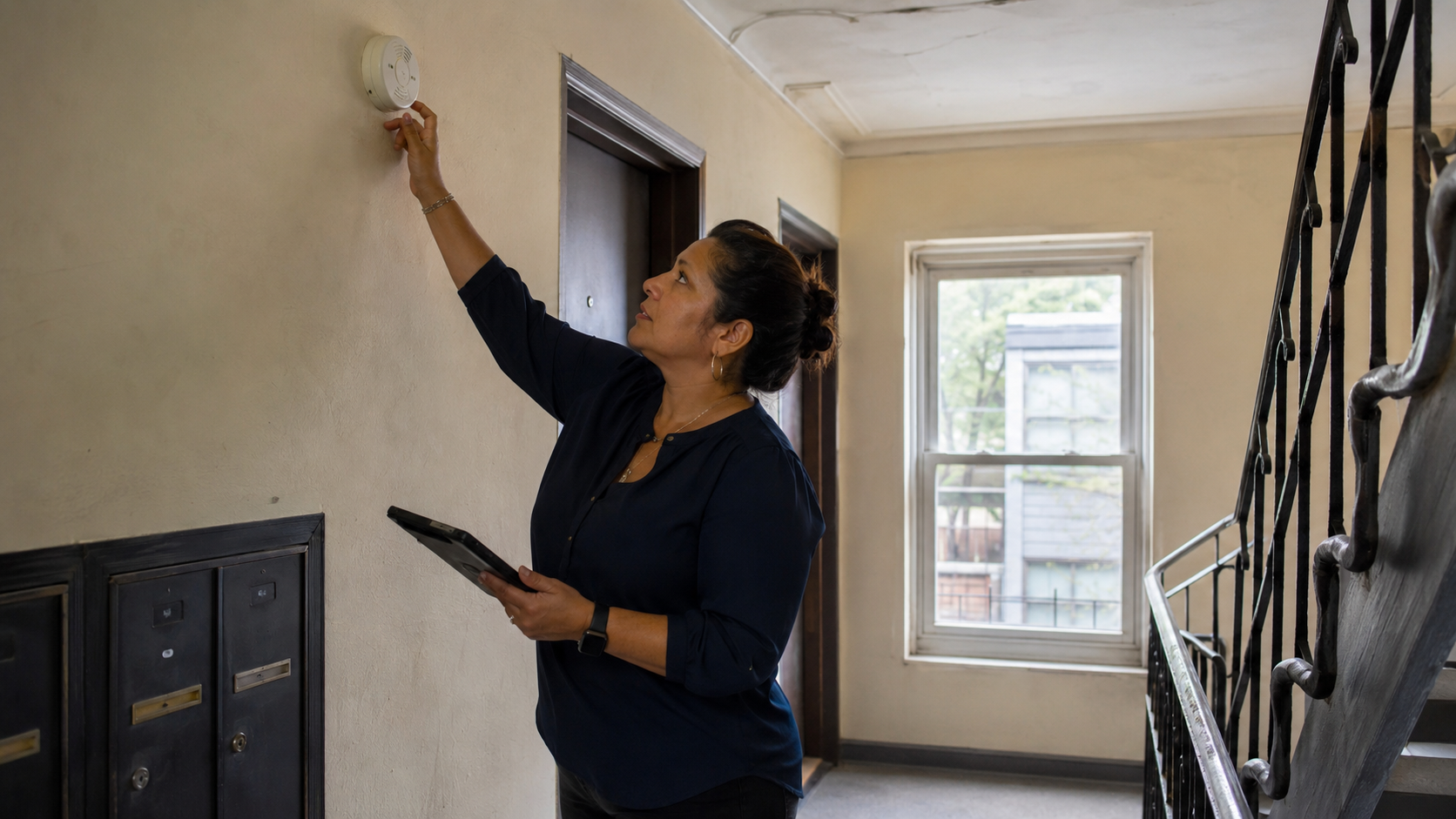
Richmond City now has a residential rental inspection framework, but that does not mean every rental property in the city is subject to routine municipal inspections. City Council adopted Ordinance 2025-161 by a 9-0 vote on November 10, 2025. The ordinance created the Residential Rental Inspection Program, or RRIP, but it did not itself designate any rental inspection districts.
For Richmond City rental owners, the important questions are narrower: which properties can be placed in an inspection district, how a district gets created, when an inspection can occur, what happens after a property passes, and what an owner can actually be charged. Those municipal requirements sit alongside the same property-condition work addressed through a structured rental maintenance and inspection process, while the broader state-law framework remains covered in our Virginia landlord-tenant law guide.
Current status: The framework ordinance created the program and the rules for future districts. A specific rental inspection district requires separate City Council action. The City must also hold a public hearing before establishing or amending a district. The ordinance does not authorize one citywide inspection district.
Key Takeaways
- Richmond City Council adopted the rental inspection framework on November 10, 2025, but the ordinance itself did not designate any inspection districts.
- A Richmond rental inspection district cannot include a building with fewer than three dwelling units. A triplex can therefore qualify; a single-family rental or duplex cannot be included under the district rules adopted in Ordinance 2025-161.
- If a district includes more than one parcel, those parcels must have a common owner or common manager.
- An initial inspection cannot occur until at least 90 days after the applicable rental inspection district is established.
- Richmond's ordinance charges no fee for the initial or periodic inspection, but follow-up inspections after cited violations can carry a reinspection fee.
- New dwelling units and units that pass an initial or periodic inspection without qualifying Building Code violations receive a 48-month exemption.
- Owners should watch Richmond City Council agendas and public-hearing notices for district-designation actions rather than assuming the 2025 ordinance alone triggers an inspection.
In This Guide
- What Richmond Actually Adopted
- Which Rental Properties Can Be Included
- What Happens After a District Is Designated
- Inspection Frequency and 48-Month Exemptions
- What Richmond's Fee Rules Actually Say
- What Other Virginia Cities Tell Us About Fees
- What Richmond City Rental Owners Should Do Now
What Richmond Actually Adopted
Richmond's Residential Rental Inspection Program ordinance creates the legal framework for City Council to establish specific rental inspection districts. The adopted ordinance passed 9-0 on November 10, 2025.
The distinction between creating the program and creating an inspection district matters. Richmond stated after adoption that Ordinance 2025-161 did not itself designate any districts. A district requires a separate Council action.
Before establishing a district, Council must find that inspections are needed to protect health, safety, and welfare; that the rental units are deteriorated, deteriorating, or need inspection to prevent deterioration; and that inspections are necessary to maintain safe, decent, and sanitary conditions.
The ordinance allows Council to consider several indicators when making that decision, including:
- Building Code or health code violations during the previous 48 months;
- police, fire, or other public safety and emergency-service responses during the previous 48 months; and
- written tenant petitions asking the Building Official to address rental conditions affecting health, safety, or well-being.
Council must hold a public hearing before a district is established or amended. The Chief Administrative Officer must also provide a fiscal impact statement addressing staffing and other enforcement needs. A district created under Richmond's ordinance expires after five years unless Council later reestablishes it.
Richmond also expressly rejected a citywide approach. The ordinance says the program cannot be interpreted to authorize one or more citywide rental inspection districts. The City's own explanation of the program likewise describes future designations as parcel-specific or district-specific actions rather than automatic inspection of every rental property in Richmond.
Which Rental Properties Can Be Included
One of the most important details for owners is the building-size threshold. Richmond's ordinance states that a rental inspection district shall not include any building containing fewer than three dwelling units.
That means the threshold is three units, not more than three units. A triplex can potentially fall within the program. A fourplex or larger multifamily building can as well. Under the ordinance as adopted, a single-family rental or duplex cannot be included in a rental inspection district.
There is a separate rule when a proposed district contains multiple parcels. More than one parcel can be combined into a district only when all of the parcels have a common owner or common manager. The ordinance also treats related subsidiary entities sharing a parent entity, or entities with the same person managing day-to-day operations, as potentially commonly owned or managed.
For owners with several adjacent multifamily properties, that distinction matters. The City's district structure can follow a commonly owned or managed group of parcels, but it is not written as a general neighborhood-wide inspection program that automatically sweeps in unrelated small rental properties.
What Happens After a District Is Designated
Once Council establishes a rental inspection district, the Building Department must make reasonable efforts to notify rental owners in the district, or their designated managing agents, and explain the program and the owner's responsibilities.
The City cannot immediately begin the initial inspections. Richmond's ordinance requires a minimum 90-day period after the district is established before the Building Official may conduct an initial inspection.
The inspection is focused on two questions: whether the dwelling is being used as residential rental property and whether it complies with Building Code provisions affecting safe, decent, and sanitary living conditions.
This municipal inspection is different from the owner's own routine rental property evaluations. An owner or property manager may conduct condition evaluations to catch leaks, drainage problems, HVAC warning signs, deferred maintenance, or documentation gaps. Richmond's RRIP is a government Building Code enforcement process triggered by a designated district.
That distinction is useful operationally. A property should not first be evaluated for obvious condition problems because a City inspection notice arrived. Owners are better positioned when condition records and maintenance follow-up already exist as part of normal property management.
Inspection Frequency and 48-Month Exemptions
If a unit is not exempt, Richmond may conduct a periodic inspection after the initial inspection, but generally no more than once each calendar year. Follow-up inspections required to correct violations are separate from that periodic-inspection limit.
The ordinance also creates two important 48-month exemptions.
New Dwelling Units
A newly constructed residential rental dwelling unit receives an exemption for 48 months from the date its certificate of occupancy is issued.
Units That Pass Inspection
If an initial or periodic inspection finds no Building Code violation affecting safe, decent, and sanitary living conditions, the owner receives a 48-month exemption from the rental inspection program for that unit.
The Building Official can revoke an exemption if the property later develops a qualifying Building Code violation. A sale can also change the inspection picture: after a residential rental dwelling unit in an inspection district is sold, Richmond may perform a periodic inspection despite an exemption that had been granted to the prior owner.
For larger multifamily developments, the initial process is based on sampling rather than automatic inspection of every unit. When a development contains more than 10 dwelling units, Richmond generally must inspect at least two units but no more than 10 percent of the total. If that sample reveals qualifying Building Code violations, the Building Official may expand the inspection to additional units as necessary.
This makes good property-wide standards especially important for multifamily owners. A problem found in the initial sample can expand the scope of the City's review. Consistent rent-ready and property-condition standards are more useful than preparing only the particular units expected to be inspected.
What Richmond's Fee Rules Actually Say
Calling Richmond's program "free" or saying that owners will pay "no inspection fees" goes too far.
Virginia Code § 36-105.1:1, which authorizes local rental inspection programs, allows a locality to establish per-dwelling-unit fees for initial, follow-up, and periodic inspections. Richmond therefore had a policy choice about how to structure its fees.
Richmond's adopted ordinance makes that choice explicit:
- Initial inspection: no fee.
- Periodic inspection: no fee.
- Follow-up inspection after cited violations: a fee may apply.
Section 5-167 says a follow-up inspection of a dwelling unit carries the same fee as the City's reinspection fee for failure to correct previously cited violations.
The City's current Appendix A fee schedule lists a reinspection fee of $32 for residential inspections and $63 for commercial inspections. Because the rental program applies to multifamily buildings and the ordinance itself does not spell out which Appendix A classification will apply to every property, owners should confirm the applicable amount if a follow-up inspection is actually required.
The practical point is straightforward: passing the initial or periodic inspection is designed to cost the owner nothing under the adopted Richmond ordinance. Failing the inspection and requiring additional City trips can create a fee.
That structure also gives owners a financial reason to address known Building Code and habitability issues before they become repeat-inspection items. Virginia landlords already have separate maintenance and code-compliance duties, and our guide to landlord and tenant repair responsibilities explains where those obligations generally fall.
What Other Virginia Cities Tell Us About Fees
Richmond is not designing this program in a vacuum. Other Virginia localities have taken different approaches to rental inspections and property-quality programs. They are useful comparisons, but they are not interchangeable programs.
Norfolk: Free, but Voluntary
Rent Ready Norfolk is a useful contrast. Norfolk describes it as a free, voluntary rental education and support program. Its services include residential quality assessments, landlord and renter education, and other rental resources.
That is not the same model Richmond adopted. Norfolk's current Rent Ready program is voluntary. Richmond's ordinance establishes a mechanism for mandatory Building Code inspections after Council designates a qualifying district.
Petersburg: A Historical Example of an Inspection Fee
Petersburg shows why it is risky to assume Virginia rental inspection programs are automatically free. The City's published revenue manual lists a Rental Housing Inspection Fee of $10, collected at the initial inspection and then every four years. The manual says that rate was established in 2007.
That document is older, so the $10 figure should be treated as a historical example rather than a verified statement of Petersburg's current 2026 fee. What it does establish is that Virginia localities have used the state-law authority to charge owners directly for rental inspections.
Hopewell: Reinspection Costs After Failed Inspections
Hopewell provides another useful comparison. The City's published rental property inspection form identifies a $100 reinspection fee at the third inspection.
Again, the program details are not identical to Richmond's. The useful lesson is the fee structure: local governments may choose to minimize the cost of the initial compliance check while putting more of the financial consequence on repeat inspections after deficiencies remain unresolved.
Richmond's adopted approach follows that general logic. The initial and periodic inspections are expressly free, while a follow-up inspection after violations have been cited can trigger the City's existing reinspection fee.
For Richmond owners, that is a much more accurate description than simply saying there are no fees.
What Richmond City Rental Owners Should Do Now
Most owners do not need to create a complicated new compliance program because Ordinance 2025-161 exists. They do need to know whether their property is the type of property the ordinance can reach and what would happen if Council later designates a district containing it.
- Confirm the unit count. Buildings with fewer than three dwelling units are outside Richmond's adopted rental inspection district rule. Owners of triplexes and larger multifamily buildings should pay closer attention.
- Look at ownership and management across parcels. If several adjacent parcels are owned or managed together, Richmond's ordinance allows them to be grouped into one district when the other statutory findings are satisfied.
- Keep condition documentation current. A municipal inspection should not be the first time an owner learns about a recurring leak, unsafe railing, electrical concern, common-area issue, or deferred repair.
- Close out known Building Code and habitability issues. Good records should show what was reported, what was inspected, what work was authorized, and when the repair was completed.
- Watch City Council agendas and public-hearing notices. A district requires a separate Council action. The district-designation process is the key trigger owners need to monitor.
- Read the actual City notice if a district is created. Confirm the district boundaries, establishment date, the earliest possible inspection date, any existing exemption, and what the Building Department requires from the owner or managing agent.
PMI James River already uses condition evaluations, documented maintenance follow-up, vendor coordination, and repair closeout as part of normal management. That does not make a property automatically exempt from Richmond's program, but it puts the owner in a much better position to respond to an inspection without starting from a blank file.
Richmond Rental Inspection Program FAQ
Does Richmond City now inspect every rental property?
No. Ordinance 2025-161 created the program framework, but it did not create a citywide inspection district. Richmond's ordinance specifically prohibits a citywide rental inspection district. A qualifying district must be established through a separate Council action and public process.
Can a Richmond triplex be included?
Yes. The ordinance excludes buildings containing fewer than three dwelling units. A three-unit building therefore meets the size threshold and may potentially be included if the other district criteria are satisfied.
Can a Richmond single-family rental or duplex be included in a rental inspection district?
Not under the district limitations in Ordinance 2025-161 as adopted. The ordinance states that a rental inspection district shall not include a building containing fewer than three dwelling units.
Are Richmond rental inspections free?
The initial and periodic inspections are free under the adopted ordinance. Follow-up inspections required after violations are cited are not necessarily free. Richmond ties the follow-up charge to its existing reinspection fee schedule.
How quickly can Richmond inspect a property after creating a district?
The initial inspection cannot occur sooner than 90 days after the applicable rental inspection district is established.
How long does an owner stay exempt after passing?
A unit that passes an initial or periodic inspection without a qualifying Building Code violation receives a 48-month exemption. New dwelling units also receive a 48-month exemption from the date the certificate of occupancy is issued. An exemption can be revoked if the unit later develops a qualifying violation.
Does using a professional property manager automatically exempt the rental?
No automatic management-based exemption appears in Richmond's adopted ordinance. Virginia law allows localities to create certain exemptions for professionally managed rentals, but Richmond's ordinance lists its exemptions for new dwelling units and compliant dwelling units. Owners should not assume professional management removes a qualifying property from the program.
Conclusion
Richmond's Residential Rental Inspection Program is narrower than a citywide rental registration or annual inspection mandate. The 2025 ordinance created a process for Council to target qualifying multifamily rental properties through separately designated districts, with public hearings, owner notice, a 90-day minimum before initial inspections, and substantial exemptions for new and compliant units.
The fee rule is also more precise than "no fees." Richmond chose not to charge for initial or periodic inspections, but follow-up inspections after violations can cost the owner. Experience from other Virginia localities shows why that distinction matters: the state gives cities room to structure rental inspection programs differently.
Prepare the Property Before an Inspection Becomes the Deadline
For Richmond City owners with triplexes, apartment buildings, or other multifamily rentals, the best preparation is the same work that protects the property now: document condition, address known problems, close out repairs, and know what is happening across the building before an outside inspection identifies it.
PMI James River helps Richmond rental owners coordinate maintenance, property evaluations, documentation, and ongoing compliance as part of the management process. Owners who want to review how their current systems would stand up to a municipal inspection can schedule a consultation with PMI James River.